Writecream is the more direct choice when you want ready-made SEO, cold outreach, audio, and image tools at a low published price. ChatGPT is the stronger choice when one workspace must also research, reason over files, analyze data, browse, code, create images, and adapt through conversation. The deciding factor is not which model sounds smarter in a blank prompt. It is whether your team needs a guided production menu or a broad problem-solving environment.
| Decision point | Writecream | ChatGPT |
|---|---|---|
| Best fit | Repeatable content, SEO, outreach, and multimedia tasks | Research, analysis, files, reasoning, coding, and flexible writing |
| Working style | Pick a named tool, complete its fields, generate | Describe the task, provide context, iterate in conversation |
| SEO | Lexi and SEO/GEO-specific workflows | Flexible assistance, but not a dedicated rank-tracking platform |
| Sales outreach | URL-based icebreakers and cold-email tools | Custom messaging with prompts, files, and connected knowledge |
| Multimedia | Voice-overs, podcasts, audio icebreakers, images | Image generation plus multimodal chat; plan limits vary |
| Entry path | Free Forever and published self-serve plans | Free plan plus several consumer and business tiers |
| Bottom line | Better guided marketing utility belt | Better general AI workspace |

Writecream vs ChatGPT: the short answer
Choose Writecream if your recurring queue looks like this: generate an SEO draft, create a LinkedIn or cold-email icebreaker from a profile URL, make a voice-over, then export a draft for editing. Its named tools reduce setup and make it easier to give a junior operator the same sequence every time.
Choose ChatGPT if the request often changes shape. It is better suited to reading uploaded documents, comparing evidence, analyzing a spreadsheet, browsing a topic, writing code, producing a draft, and revising it through several turns. Its flexibility is valuable, but the operator must define the process and quality controls.
Neither tool replaces subject-matter review. Both can produce plausible errors, unsupported claims, generic prose, or content that needs disclosure and rights checks.
The category boundary matters more than feature counts
Writecream markets a collection of more than 75 tools, while its plan cards and older sections use different counts for premium tools and templates. Those numbers are not directly comparable to ChatGPT capabilities. One named Writecream template may represent a narrow job. One ChatGPT conversation can cover many jobs, depending on the model, plan, connected sources, and prompt.
A useful category test is:
- Writecream: a menu of guided marketing generators with adjacent SEO, outreach, audio, image, and publishing functions.
- ChatGPT: a general AI interface whose tools can include web research, file analysis, image generation, coding, projects, custom GPTs, and connected apps.
If you compare only the number of menu items, Writecream looks broader. If you compare the range of problems a skilled operator can solve, ChatGPT is broader.
How the production workflows differ
Writecream starts with a use case
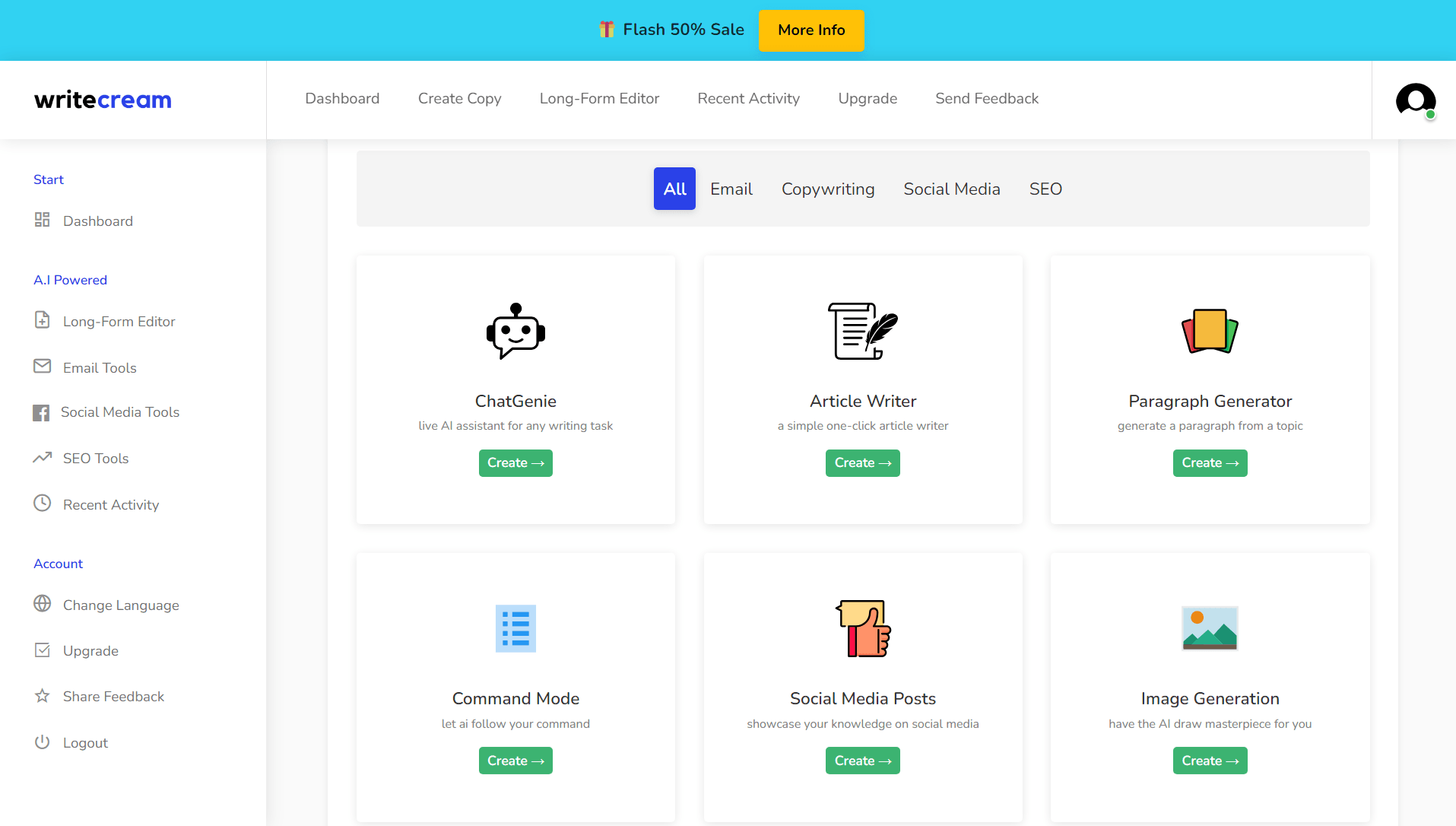
A Writecream operator normally selects an article writer, email generator, icebreaker, voice-over, image tool, or another defined module. The interface asks for task-specific inputs. This lowers prompt-design effort and can make training easier.
The drawback is rigidity. A template can accelerate the common path but may be awkward when the brief needs unusual evidence, custom analysis, or several dependent steps.
ChatGPT starts with context and a conversation
ChatGPT begins with a prompt, file, image, connected source, or voice interaction. The operator can ask follow-up questions, request analysis, change the output format, or keep working in a project. That makes it easier to combine research and writing in one thread.
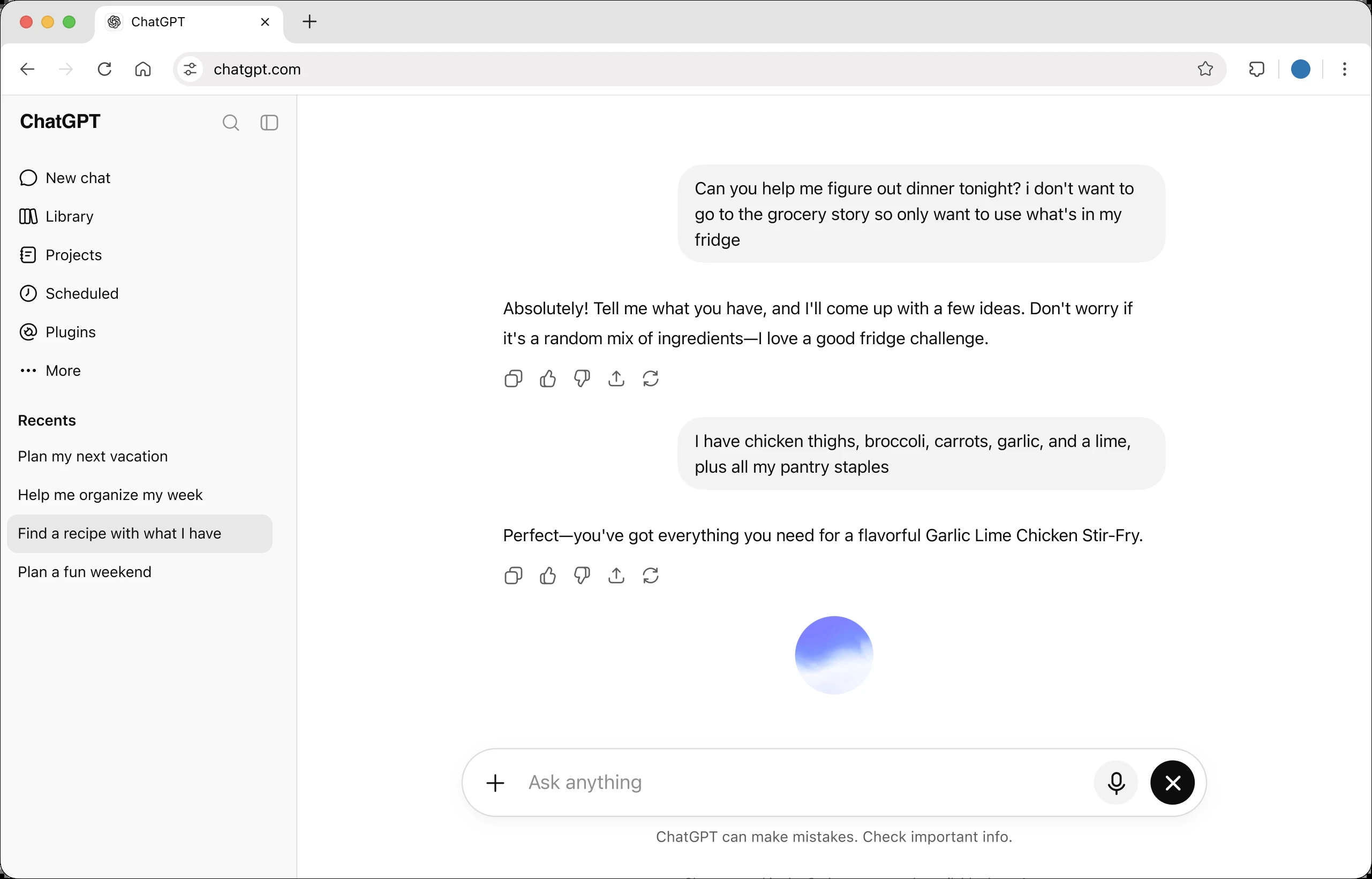
The trade-off is process variance. Two operators can get very different results from the same broad goal. Teams need reusable instructions, source requirements, review rubrics, and workspace governance if they want consistency.
Long-form content and SEO
Writecream offers a more prescribed SEO path
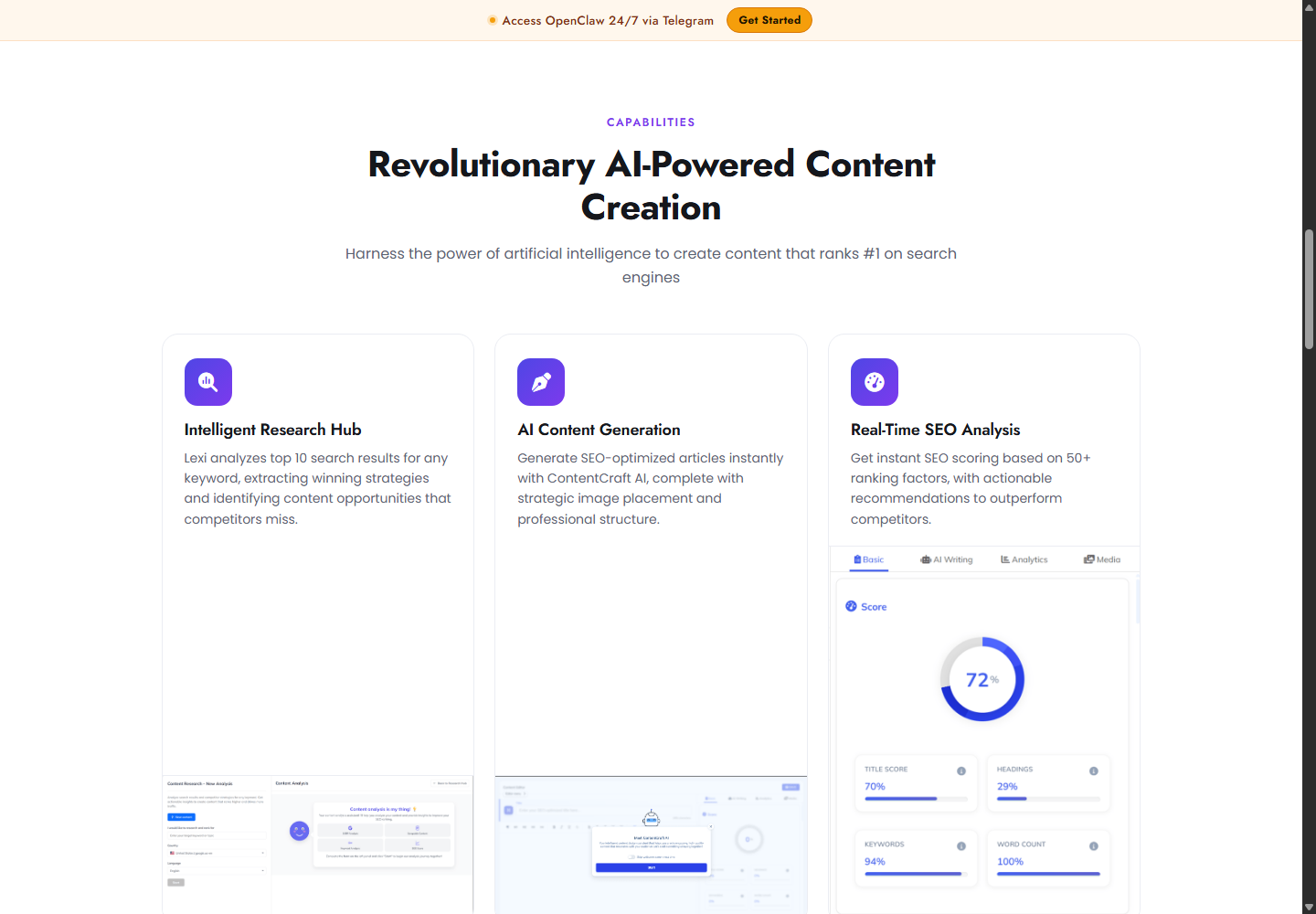
Writecream's Lexi page describes a keyword-to-research-to-article workflow with SEO scoring, competition analysis, and WordPress export. That makes its intended use easy to understand: start with a query, assemble a brief, generate or edit the article, then publish after review.
ChatGPT can research a topic, build an outline, inspect source files, draft sections, and critique them. It can be more flexible when the task involves several documents or custom analysis. However, it is not a substitute for a current keyword database, rank tracker, crawl, or verified SERP dataset unless those sources are explicitly connected and checked.
Which is better for SEO professionals?
Use Writecream when a lightweight, guided article workflow is more valuable than deep customization. Use ChatGPT when the SEO team already has trusted data and wants a flexible reasoning and editing layer around it.
For either tool:
- Capture the live search intent and competing page types.
- Build claims from retrievable sources.
- Separate source facts from editorial judgment.
- Add first-hand evidence where the author truly has it.
- Review schema, links, visuals, and conversion elements separately.
- Measure published performance rather than trusting a vendor score.
Google's guidance focuses on helpful, reliable content and warns against scaled content abuse. Neither a humanizer nor a model choice creates a ranking advantage by itself.
Outreach and sales personalization
Writecream has the clearer productized outreach path. Its public tools include personalized cold-email and LinkedIn icebreakers based on a profile or website URL, with a CSV-oriented workflow for multiple prospects. It also promotes audio and image icebreakers.
ChatGPT can create strong personalized messaging when you provide accurate account data, a clear value hypothesis, exclusions, and examples. Its connected apps may help teams work with sources such as Gmail, Google Drive, Slack, HubSpot, or other services, subject to plan and permission boundaries. That is broader than a single icebreaker generator, but it requires more setup and governance.
For sales teams, the responsible workflow is the same in both products:
- Use public or lawfully obtained prospect data.
- Do not infer sensitive traits.
- Verify every company-specific statement.
- Keep sender identity and opt-out mechanics accurate.
- Review tone before sending.
- Do not treat generated personalization as consent.
Writecream generates copy; it is not proof of CAN-SPAM compliance or a replacement for a properly configured sending platform.
Brand voice, team consistency, and governance
ChatGPT can support reusable project instructions, custom GPTs, shared workspaces, and connected company knowledge, depending on plan. That gives a capable team a flexible way to encode tone, source rules, and repeatable tasks.
Writecream offers brand-voice and workflow tools, but its public documentation is less detailed about enterprise governance, retention controls, SSO, SCIM, and data-processing commitments. Do not infer that missing documentation means no controls exist. It means procurement teams need answers before using sensitive material.
| Governance question | Why it matters |
|---|---|
| Can admins control connectors and sharing? | Connected sources may contain confidential data |
| Are prompts or files used for model training? | Public policy and contractual terms may differ by plan |
| What retention and deletion controls apply? | Teams need an auditable lifecycle for client data |
| Are roles, SSO, SCIM, and logs available? | Larger teams need access and accountability controls |
| Which subprocessors receive content? | Procurement and privacy reviews require a data map |
ChatGPT's plan-specific data controls should also be reviewed rather than generalized from one tier to another. Consumer and business offerings do not necessarily use identical settings or commitments.
Images, audio, and other media
ChatGPT provides a strong multimodal workspace for understanding images, creating images, and combining visual tasks with conversation. It is useful when media work depends on the same research and instructions as the written asset.
Writecream's advantage is its menu breadth: voice-overs, podcasts, audio icebreakers, image tools, and marketing templates sit beside the writing features. A team that wants several quick media outputs may prefer that packaging.
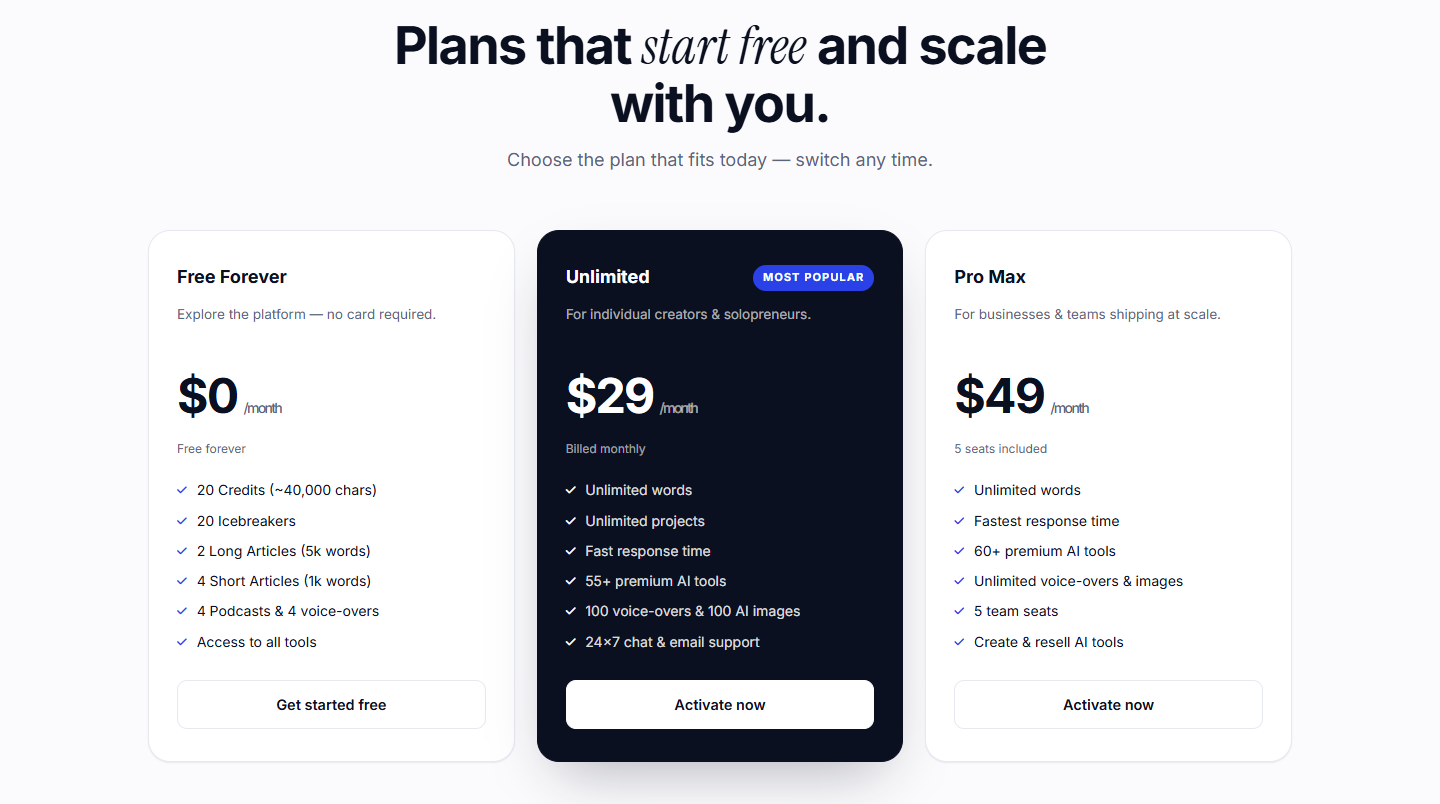
The public Writecream plan cards show that “unlimited words” does not make every media function unlimited. Voice-over, image, and other quotas can remain capped. ChatGPT also uses plan, model, and rate limits. Compare the actual meter for your workload, not the word “unlimited.”
Pricing and value
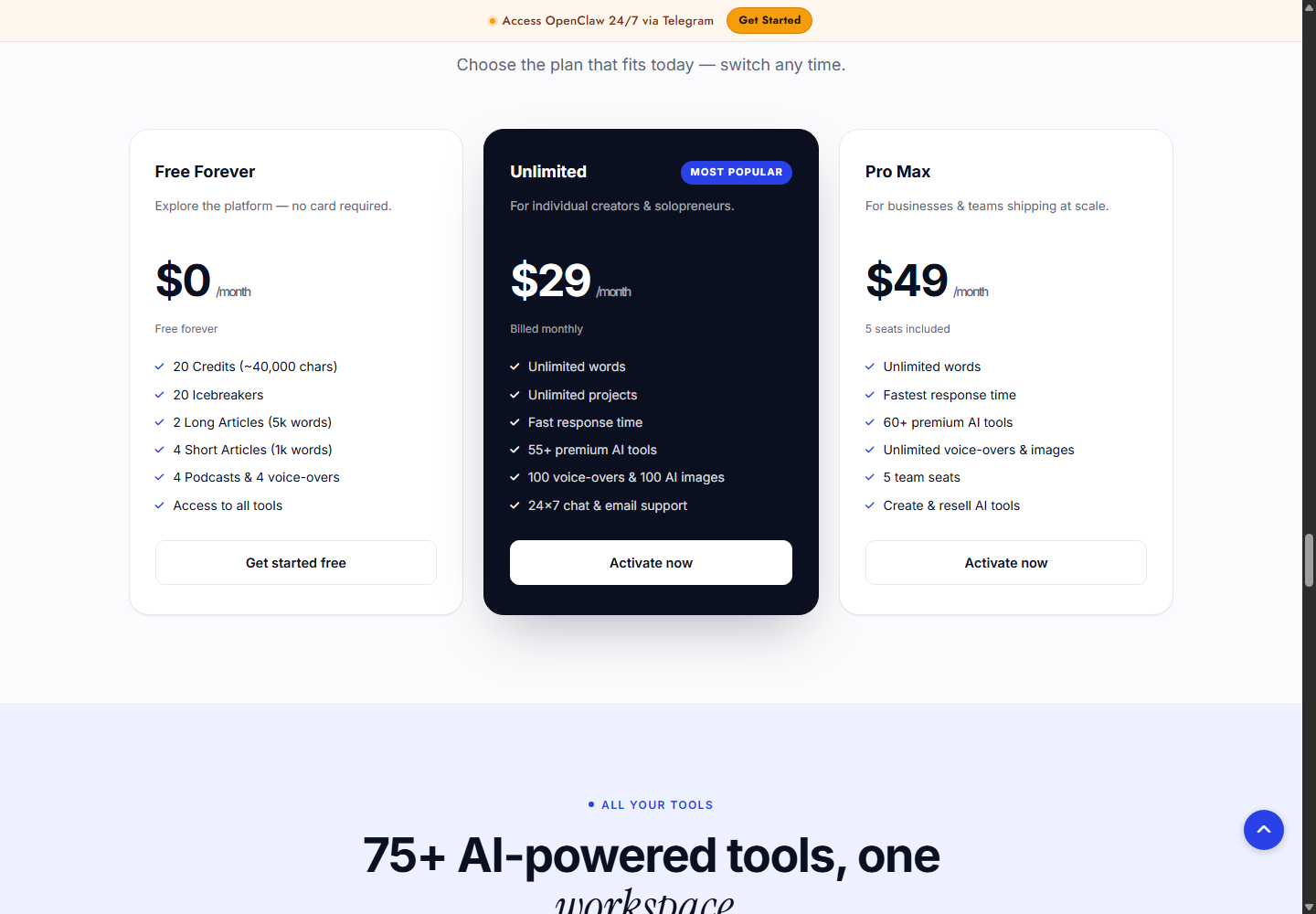
Writecream publishes a Free Forever tier, a $29 per month Unlimited tier, and a $49 per month Pro Max tier on its current homepage. The same site also promotes a separate $59 lifetime offer. Free allowance wording conflicts across public surfaces, and fair-use details for unlimited claims are not fully specified. Verify the in-app meter and checkout terms.
ChatGPT has a free tier plus paid consumer and business tiers. OpenAI's official help center lists ChatGPT Plus at $20 per month, while other tiers have different access, limits, and workspace controls. API billing is separate from a ChatGPT subscription.
The better value depends on labor, not only subscription price:
- Writecream can be cheaper when a small team repeatedly uses its named templates with minimal setup.
- ChatGPT can be cheaper when one flexible workspace replaces several research, analysis, drafting, and coding tools.
- Either becomes expensive if weak inputs create factual cleanup, brand rewrites, or compliance review.
See Writecream's current plans and tools
Safety and privacy differences
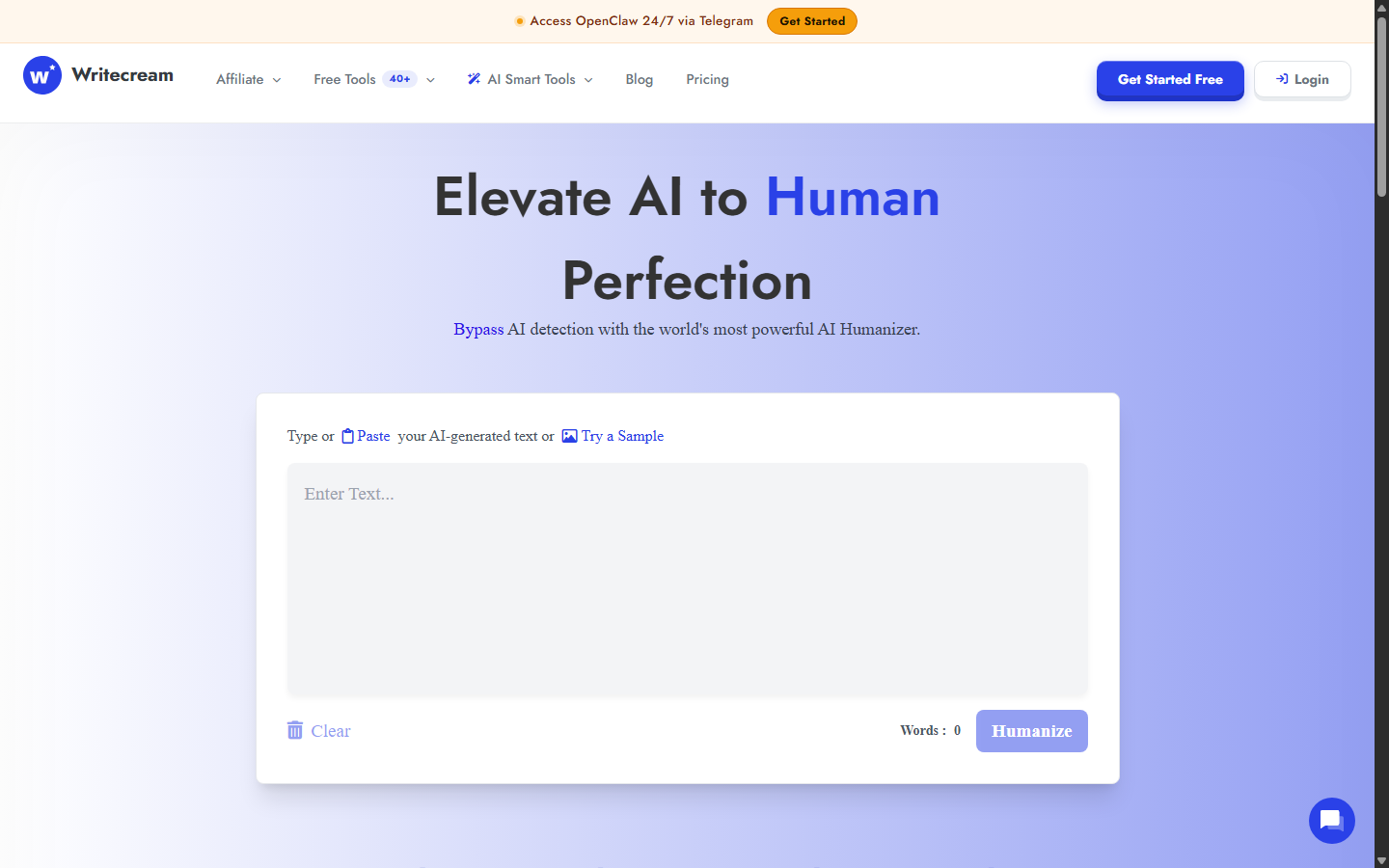
Writecream has public privacy, terms, and refund pages, but its public AI-specific disclosures leave questions about prompt retention, training, subprocessors, certifications, and enterprise controls. Use low-sensitivity data until those questions are answered.
OpenAI publishes plan-specific privacy and data-control documentation, but users still need to configure the correct workspace and connector permissions. Do not paste customer lists, unpublished strategy, credentials, regulated records, or confidential documents into either service without authorization and a completed vendor review.
Output safety is separate from account security. Verify:
- names, numbers, quotations, and citations;
- originality and rights to source material;
- potentially defamatory or discriminatory claims;
- disclosure obligations;
- outreach consent and suppression lists;
- brand and legal approval.
Who should choose Writecream?
Writecream is the more practical choice when:
- the team wants named tools rather than an open-ended assistant;
- SEO drafts and outreach icebreakers are recurring jobs;
- audio, voice-over, or image utilities are useful add-ons;
- a low public subscription price matters;
- workflow flexibility is less important than speed to a first draft.
Read the full Writecream review for product fit, limitations, and the current evaluation boundary. You can also compare the wider market in our Writecream alternatives guide.
Who should choose ChatGPT?
ChatGPT is the better fit when:
- projects combine research, files, analysis, writing, and coding;
- the operator needs iterative reasoning rather than fixed templates;
- teams want reusable projects, GPTs, connected apps, or company knowledge;
- the same workspace supports marketing and non-marketing jobs;
- broad multimodal work matters more than a prebuilt outreach menu.
A hybrid workflow can also work: use ChatGPT for research and synthesis, then a dedicated system for approved production tasks. The extra handoff only makes sense if roles, sources, and version control are clear.
Final verdict
Choose Writecream for guided marketing production. Choose ChatGPT for broad, iterative knowledge work. Writecream has the clearer out-of-box path for SEO templates, personalized outreach, and several audio/image tasks. ChatGPT is more capable when the assignment changes, relies on files or connected knowledge, or requires analysis before writing.
The winning tool is the one your team can govern and review consistently. Run a small evaluation set using your real briefs, score source accuracy and edit time, and measure the approved output per hour. Do not decide from vendor demos or detector scores alone.
Try Writecream for the guided marketing workflow
Frequently asked questions
Is Writecream better than ChatGPT for SEO?
Writecream provides a more explicit SEO workflow through Lexi and related tools. ChatGPT is more flexible for research and editing when supplied with trusted data. Neither guarantees rankings.
Can ChatGPT replace Writecream?
It can reproduce many writing and personalization tasks with prompts, but it does not package every Writecream outreach, audio, and publishing workflow in the same way. Replacement depends on operator skill and process design.
Is Writecream cheaper than ChatGPT?
Writecream's current paid self-serve plans start at $29 per month, while ChatGPT Plus is $20 per month. The comparison changes when you include higher tiers, media limits, API usage, and labor.
Which tool is better for cold email personalization?
Writecream is easier for a predefined URL-to-icebreaker workflow. ChatGPT is more flexible when personalization depends on internal account research or connected knowledge. Both require human verification and compliant sending practices.
Does either tool produce publish-ready content automatically?
No. Every important draft still needs source checks, editorial revision, rights review, and the appropriate legal or brand approval.