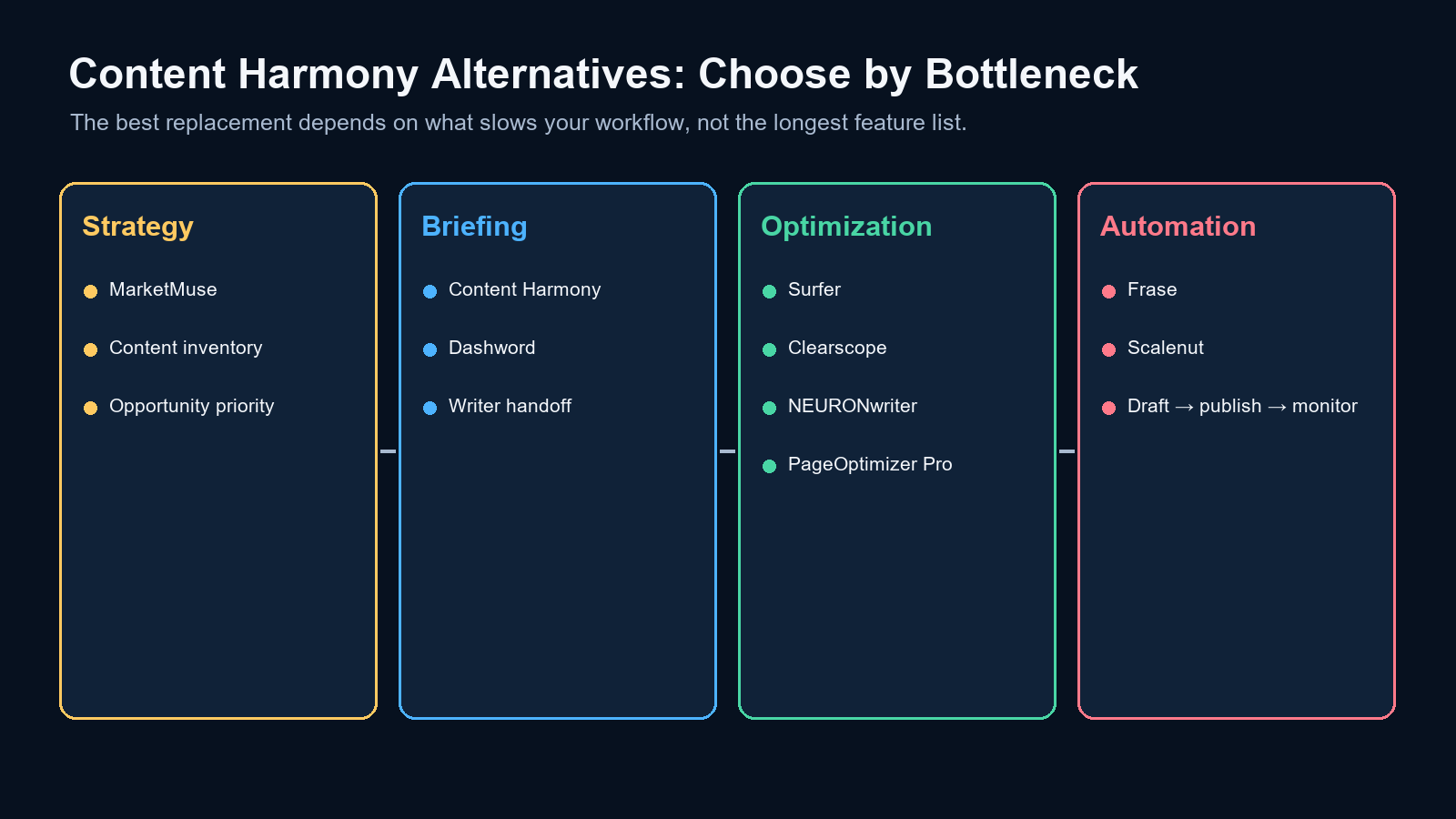
Content Harmony is one of the clearest ways to turn a target query into a Keyword Report, customizable brief, and Content Grader. The reason to replace it is rarely that the workflow is bad. It is that your bottleneck sits somewhere else: deeper live optimization, lower entry cost, AI drafting, content inventory strategy, technical on-page control, or a simpler writer experience.
| Alternative | Best for | Public starting price | Main advantage over Content Harmony |
|---|---|---|---|
| Surfer | Optimization-first SEO teams | $49/month | Deeper editor, audits, integrations, and AI visibility |
| Frase | Research-to-publishing automation | $49/month | Adds AI drafting, CMS publishing, audits, and monitoring |
| Clearscope | Premium editorial collaboration | $129/month | Polished grading and unlimited users/projects |
| MarketMuse | Site-level content strategy | Free plan | Inventory-led prioritization and personalized difficulty |
| NEURONwriter | Budget semantic optimization | $23/month | Lower entry cost, NLP scoring, and AI credits |
| Scalenut | AI-first SEO and GEO production | $59/month | Broader planning, generation, optimization, and visibility |
| Dashword | Simple briefs and writer onboarding | $99/month | Cleaner, lower-friction research and optimization loop |
| PageOptimizer Pro | Technical on-page SEO | $40/month | Granular NLP, E-E-A-T, schema, and monitoring controls |
| Content Harmony | Standardized strategist-to-writer briefs | $50/month | Connected research, brief, and grader with unlimited collaborators |
This guide compares eight close alternatives for US SEO strategists, agencies, in-house teams, and freelance writers. We excluded broad SEO suites, keyword-only databases, rank trackers, and generic AI writers that lack SERP/NLP optimization. The goal is not to find the tool with the most features. It is to find the product that removes the constraint your current workflow actually has.
Quick Answer: Which Content Harmony Alternative Should You Choose?
Choose Surfer if the brief is already good and writers need stronger live optimization. Choose Frase if you want one system to research, draft, optimize, publish, and monitor content. Choose Clearscope when clean editorial guidance and unlimited collaboration justify a premium price.
MarketMuse is the strategic option for teams deciding what to create across a large content library. NEURONwriter is the strongest budget choice. Scalenut fits AI-first SEO and GEO production, Dashword favors simplicity, and PageOptimizer Pro gives technical on-page practitioners more granular control.
Before switching, read our complete Content Harmony review. It establishes the baseline: Content Harmony starts at $50 per month for five workflows, includes unlimited users and projects, and sells 10 trial workflows for $10 without automatic renewal. Exactly one of those advantages may matter more than a competitor's longer feature list.
How We Selected These Content Harmony Alternatives
We required every product to overlap with at least three parts of Content Harmony's core job: SERP research, search-intent analysis, content briefs, topic or NLP recommendations, an optimization editor, and content scoring. A tool could also qualify by solving a closely adjacent bottleneck such as content inventory prioritization or technical on-page analysis.
We compared the products on six decision axes:
- Brief quality: Can a strategist turn SERP evidence into clear writer instructions?
- Optimization depth: Does the editor provide useful topic, term, structure, and coverage guidance?
- Workflow coverage: Does the product stop at grading, or continue into drafting, publishing, auditing, and monitoring?
- Team operations: How do seats, projects, sharing, templates, and permissions affect real cost?
- Pricing reality: What does the public entry plan include, and which limits force an upgrade?
- Learning curve: Can writers use the guidance without an SEO specialist interpreting every screen?
Pricing and limits were checked against official vendor pages available on July 31, 2026. Public monthly rates are used unless a price is explicitly annual or quote-based. Vendors change packaging frequently, so verify checkout terms before buying.
This is a researched editorial comparison, not a claim that every platform was tested under identical account conditions. No proprietary score proves that a page is accurate, original, useful, or likely to rank. Search intent, subject expertise, first-party evidence, links, technical health, and domain authority still matter.
Content Harmony Alternatives Compared Side by Side
| Tool | Best-fit buyer | Entry plan | Trial or free access | Briefing | Broader strength |
|---|---|---|---|---|---|
| Surfer | Teams optimizing drafts at volume | $49/month | 7-day Pro trial | Yes | Advanced editor, audits, AI visibility, integrations |
| Frase | Teams consolidating content production | $49/month | 7 days, no card | Yes | AI drafting, CMS publishing, audits, Content Guard |
| Clearscope | Quality-focused editorial groups | $129/month | 14 days | Topic Explorations and Drafts | Premium grading, unlimited users/projects |
| MarketMuse | Strategists with established sites | Free; paid quotes | Permanent free plan | Paid tiers | Inventory, authority, personalized difficulty |
| NEURONwriter | Freelancers and small agencies | $23/month | 7-day Gold trial | Yes | NLP scoring, AI credits, planning and integrations |
| Scalenut | AI-first SEO/GEO teams | $59/month | 7 days | Yes | Planning, generation, optimization, AI visibility |
| Dashword | Teams prioritizing simplicity | $99/month | One report, no card | Yes | Fast reports, clean score, monitoring, five seats |
| PageOptimizer Pro | Technical on-page SEOs | $40/month | Demo; 7-day refund window | Page-focused | NLP, E-E-A-T, schema, Watchdog |
| Content Harmony | Brief-led distributed teams | $50/month | 10 workflows for $10 | Excellent | Unlimited users/projects and reusable templates |
Why Look for an Alternative to Content Harmony?
Content Harmony is intentionally briefing-first. One workflow bundles a Keyword Report, Content Brief, and Content Grader for a target page. That connected process is useful when strategists research and writers execute, but it leaves several jobs outside the core product.
The first gap is topic discovery and prioritization. Content Harmony analyzes an approved query deeply; it is not a replacement for deciding which opportunities match a site's authority and business goals. MarketMuse addresses that upstream decision more directly.
The second gap is drafting and publishing. Content Harmony can improve the instructions and grade the draft, but teams wanting AI generation, native CMS publishing, automated refreshes, or content-decay monitoring may prefer Frase or Scalenut.
The third gap is optimization style. Writers who spend most of their time inside a live editor may find Surfer, Clearscope, NEURONwriter, Dashword, or PageOptimizer Pro more natural. Those platforms vary from writer-friendly topic guidance to technical page-factor analysis.
Finally, credit economics matter. Content Harmony's $50 Standard 5 plan is accessible, but a workflow is consumed for each analyzed page. A freelancer may prefer a $23 NEURONwriter plan, while an agency may value Content Harmony's unlimited seats enough to accept workflow-based pricing.
1. Surfer: Best for Deeper Live Content Optimization
Best for: SEO teams that already know what to write and want stronger in-editor recommendations, audits, integrations, and AI visibility. Starting price: $49 per month for Discovery; Standard is $99 per month. Free access: Seven-day Pro trial. Choose it over Content Harmony if: Writers need a richer optimization environment more than strategists need customizable briefs. Avoid if: Your main problem is building detailed, client-ready instructions before drafting.
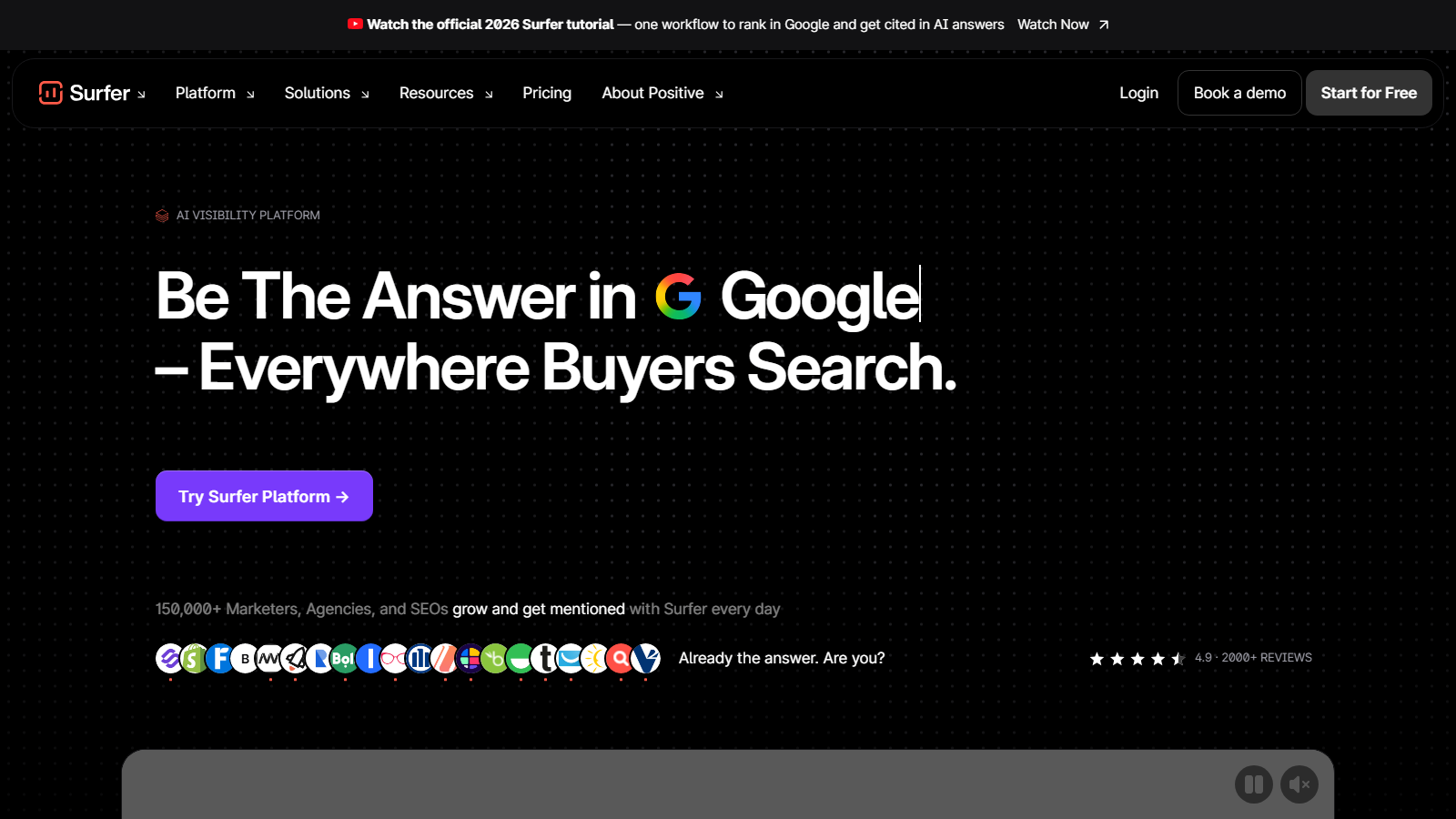
Surfer is the most natural alternative when your team says, “Our briefs are fine, but optimization after the first draft is inconsistent.” Its Content Editor provides a live Content Score and SERP-derived guidance, while the wider platform adds audits, topical planning, internal-linking tools, AI visibility features, and integrations depending on the plan.
Discovery currently costs $49 per month and supports up to 120 documents. Standard costs $99 and expands capacity while adding collaboration and AI visibility features. Google Docs and WordPress integrations can reduce the copy-and-paste friction between optimization and publishing.
Compared with Content Harmony, Surfer shifts the center of gravity from strategist research to writer execution. That makes it stronger for refresh programs and optimization at volume, but weaker when the deliverable is a heavily customized brief containing brand rules, SME questions, source requirements, visual instructions, and client notes.
Bottom line: Choose Surfer when the editor is the operating system. Stay with Content Harmony when the brief is the operating system.
2. Frase: Best for the Full Research-to-Publishing Loop
Best for: Lean teams and agencies that want research, AI-assisted drafting, optimization, CMS publishing, audits, and monitoring in one platform. Starting price: $49 per month for Starter. Free access: Seven-day trial without a credit card. Choose it over Content Harmony if: Your workflow slows down after the brief and requires too many handoffs. Avoid if: You want strict separation between strategy, human writing, and publishing.
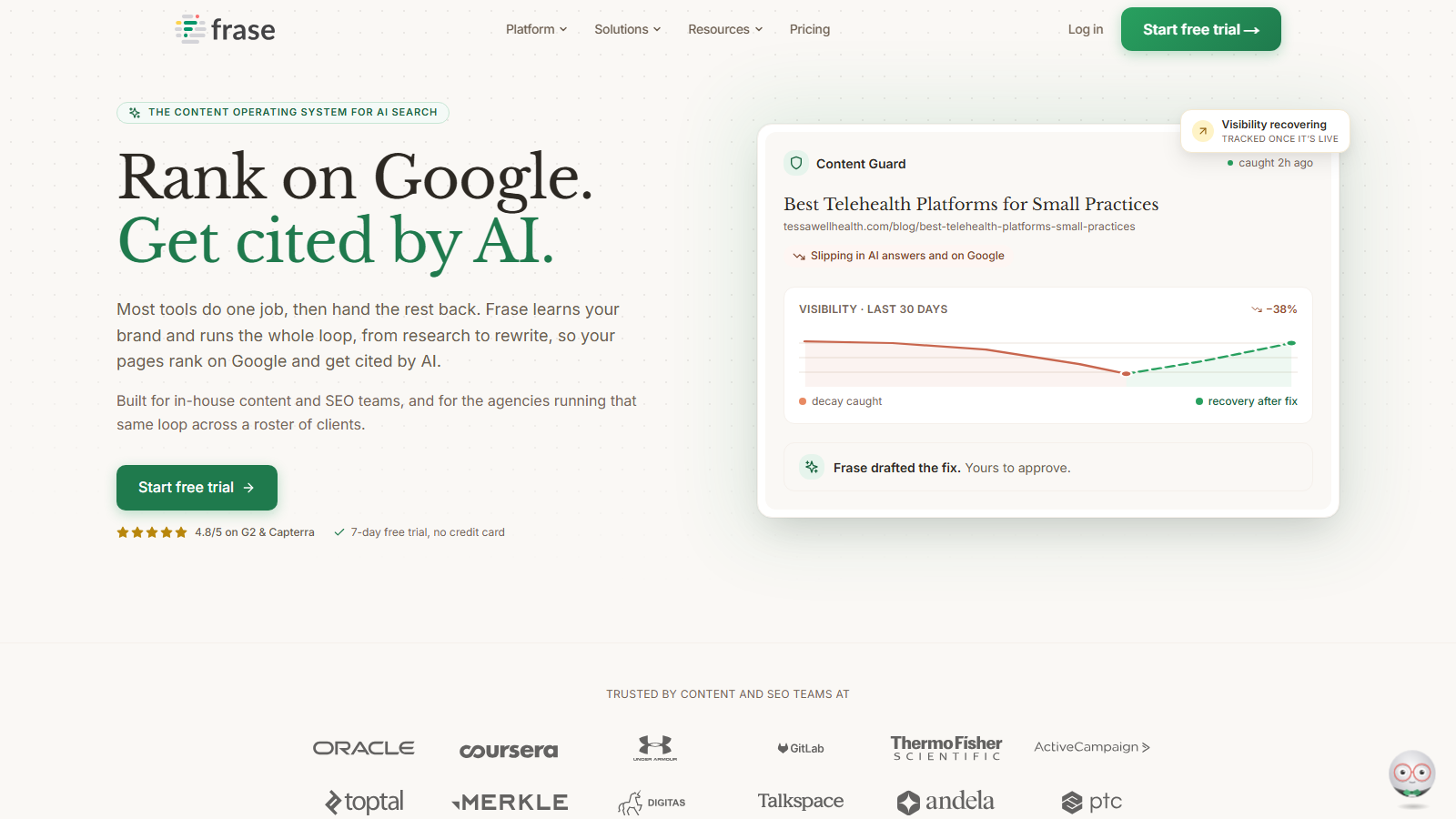
Frase extends farther across the content lifecycle than Content Harmony. Its workflow can research a query, generate a brief, assist with drafting, optimize copy, publish to supported CMS platforms, audit existing pages, and monitor changes through Content Guard.
Starter costs $49 per month and currently includes one site, one seat, 10 articles, 50 audited pages, and 25 AI generations. Professional and Scale increase output, seats, domains, audits, and automation. The trial makes it practical to test whether consolidation actually saves time.
The trade-off is governance. AI generation can accelerate production, but it can also turn a clear brief into generic copy unless editors enforce sourcing, brand voice, factual review, and information gain. Content Harmony's narrower workflow keeps the strategist visibly responsible for what enters the brief.
Bottom line: Pick Frase when consolidating tools removes measurable operational drag. Pick Content Harmony when human-controlled briefing quality matters more than end-to-end automation.
3. Clearscope: Best for Premium Editorial Collaboration
Best for: Editorial teams that value polished topic guidance, straightforward grading, and broad collaborator access. Starting price: $129 per month for Essentials. Free access: Fourteen-day free trial. Choose it over Content Harmony if: Writer adoption and a refined optimization editor matter more than the lowest base price. Avoid if: You need the most detailed research-to-brief handoff per dollar.
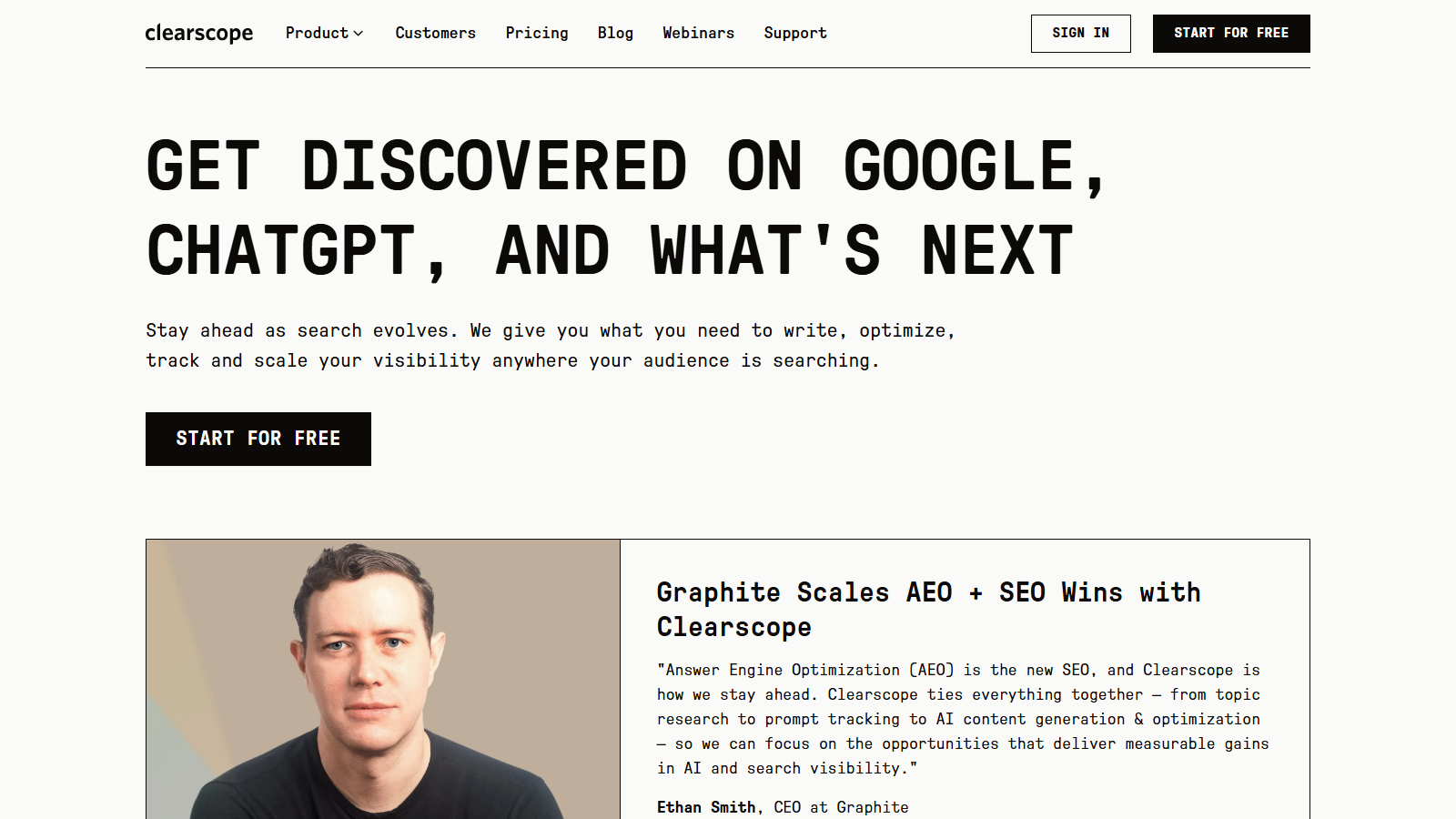
Clearscope focuses on helping writers produce relevant, comprehensive content without presenting a dense technical interface. Its grading, term recommendations, research, outlines, and content inventory make it easy for editors to establish a target and review progress.
Essentials currently costs $129 per month and includes 20 Drafts, 20 Topic Explorations, 50 Pages, and 50 tracked prompts. Every plan includes unlimited users and projects. That licensing model can be more economical than it looks when many writers, editors, and stakeholders need access.
Content Harmony remains stronger for configurable strategist-led briefs and a lower starting fee. Clearscope is stronger when the team wants a premium editing experience that contributors can understand quickly. The decision is therefore not simply $50 versus $129; it is the value of brief customization versus the value of editorial adoption.
Bottom line: Choose Clearscope for clean, scalable editorial guidance. Choose Content Harmony for deeper brief assembly and a lower entry point.
4. MarketMuse: Best for Content Inventory Strategy
Best for: In-house strategists managing a mature site and deciding which topics or pages deserve investment. Starting price: Free plan; paid Optimize, Research, and Strategy plans are quote-based publicly. Free access: One user and 10 queries per month on the free plan. Choose it over Content Harmony if: Opportunity selection is a bigger problem than producing a brief for a known keyword. Avoid if: You are a writer who receives approved assignments and only needs fast guidance.
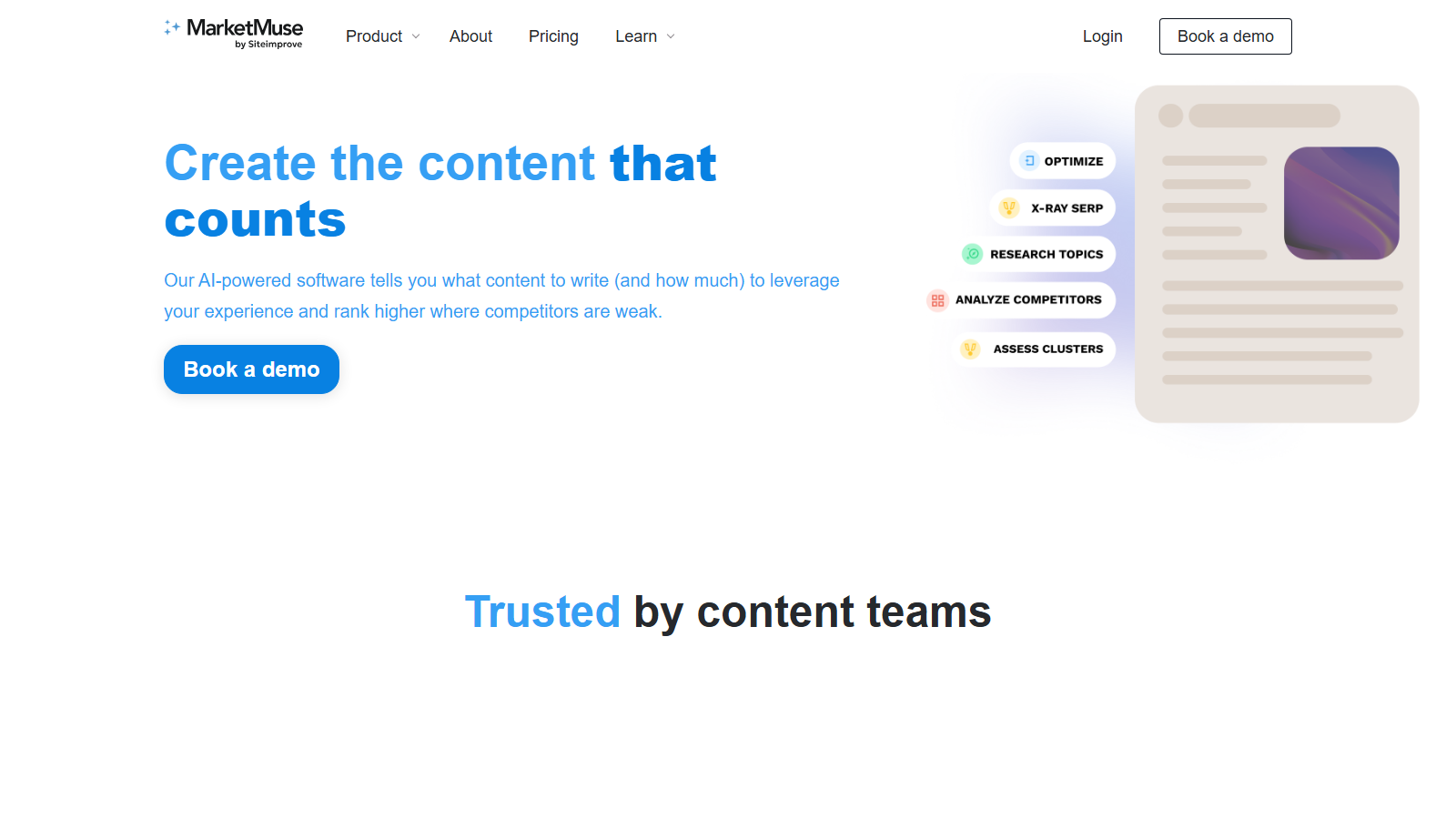
MarketMuse solves an upstream problem. Its site inventory and topic models use metrics such as Personalized Difficulty, Topic Authority, and Competitive Advantage to show which opportunities fit a domain's existing coverage. That can prevent teams from producing well-optimized pages for topics they have little chance to own.
The free plan includes 10 monthly queries but excludes content briefs and strategy documents. Paid tiers add inventory, tracked topics, Article Briefs, Strategy Documents, and greater query capacity. MarketMuse also supports specialized brief formats such as comparisons, FAQs, guides, how-tos, listicles, and product reviews.
This depth is valuable for content leaders and excessive for many freelancers. Content Harmony starts once the target query is selected and makes the handoff to a writer easier. MarketMuse earns its higher complexity when choosing the right opportunity is worth more than producing another report quickly.
Bottom line: Use MarketMuse to decide what your site should create or update. Use Content Harmony to turn an approved decision into a consistent brief.
5. NEURONwriter: Best Budget Alternative for Semantic SEO
Best for: Freelancers, small sites, and cost-conscious agencies that want SERP analysis, NLP recommendations, scoring, and AI assistance. Starting price: $23 per month for Bronze, or $19 per month with annual payment. Free access: Seven-day Gold-level trial without a credit card. Choose it over Content Harmony if: Lower monthly cost and flexible optimization features matter more than unlimited collaboration. Avoid if: You need the cleanest strategist-to-writer brief process across many clients.
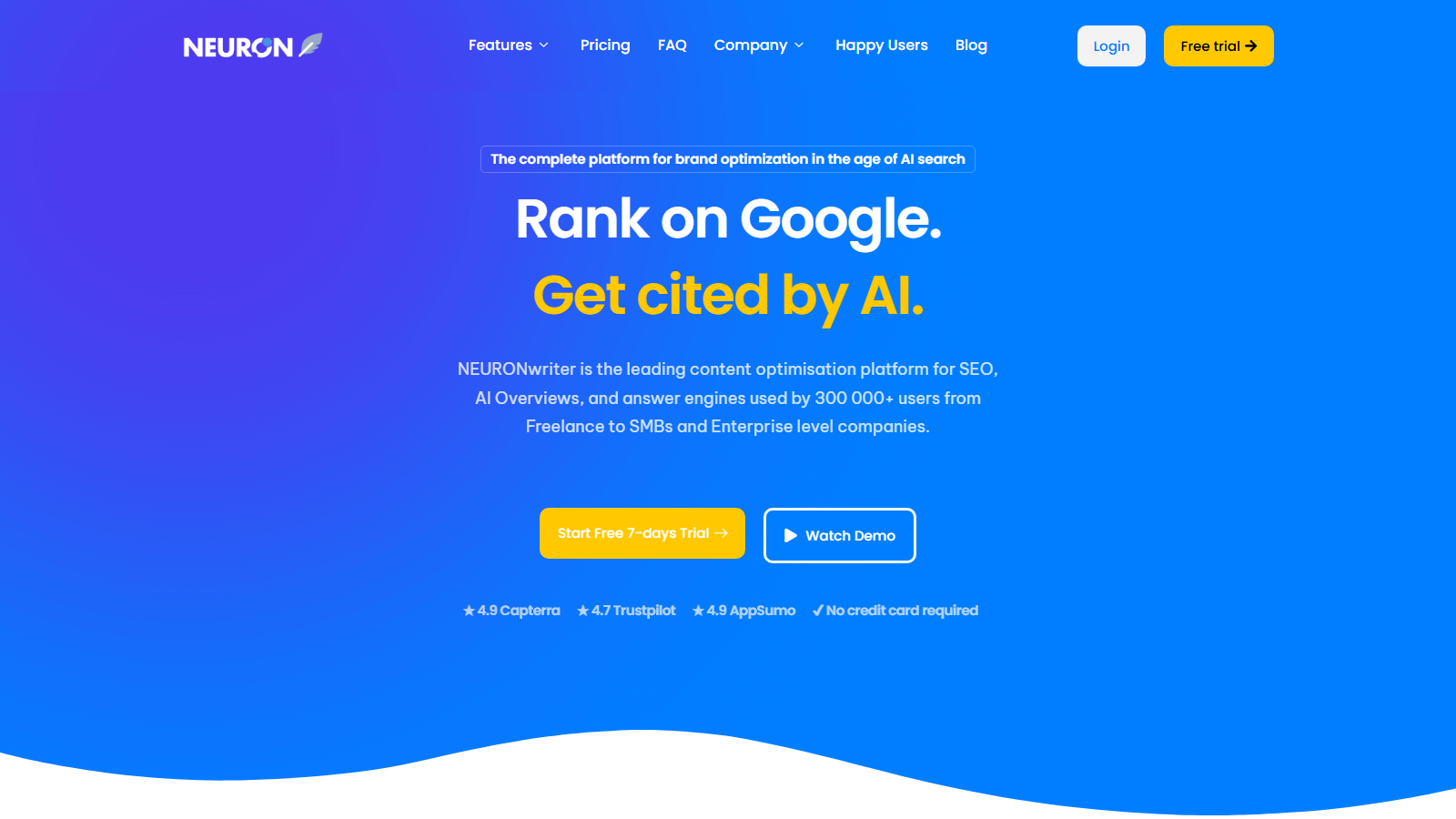
NEURONwriter has the strongest price-led case in this list. Bronze includes two projects, 25 content analyses, and 15,000 AI credits for $23 per month. Higher tiers add more projects, analyses, collaboration, plagiarism checks, integrations, API access, and the option to use an external OpenAI key.
The workflow covers competitor selection, important terms, content planning, scoring, and AI-assisted drafting. Suitable higher plans add WordPress, Google Search Console, Shopify, internal-linking features, and team functions. That breadth is substantial for the price.
The headline price can still mislead. An agency needing many projects, user management, and API access will not remain on Bronze. Compare the exact required tier with Content Harmony's unlimited users and projects, then model reports or analyses at realistic monthly volume.
Bottom line: NEURONwriter is the practical budget choice for semantic optimization. Content Harmony is easier to standardize when briefing and collaboration are the main jobs.
6. Scalenut: Best for AI-First SEO and GEO Production
Best for: Teams that want planning, AI generation, SEO optimization, and AI-search visibility in a broader production system. Starting price: $59 per month on monthly billing; promotional annual pricing may be lower. Free access: Seven-day trial. Choose it over Content Harmony if: You want the platform to produce and optimize content, not only research, brief, and grade it. Avoid if: Your writers already produce strong copy and need only a focused brief workflow.

Scalenut combines SERP research, content planning, AI writing, optimization, audits, internal linking, and GEO visibility. Current standard monthly plans start at $59 for Starter, $89 for Plus, and $199 for Professional, while annual promotions can reduce the effective monthly price.
This broader execution layer can reduce subscriptions and handoffs for an AI-first production team. It also creates more settings, limits, and outputs to govern. AI-generated articles still require expert review, source verification, brand editing, and a clear policy for what must not be automated.
Content Harmony offers a calmer boundary: the strategist researches and builds the brief, the writer drafts, and the grader supports revision. Scalenut is a better fit when the business explicitly wants to collapse those roles into a faster assisted workflow.
Bottom line: Choose Scalenut for AI-led SEO/GEO execution. Choose Content Harmony for controlled, repeatable human handoffs.
7. Dashword: Best for Simple Briefs and Writer Onboarding
Best for: Small teams that want fast SERP reports, clear briefs, a readable content score, and minimal training. Starting price: $99 per month for Startup. Free access: One report without a credit card. Choose it over Content Harmony if: The same people research, write, and optimize, and they want fewer workflow steps. Avoid if: You need highly customizable agency briefs or the lowest monthly entry price.
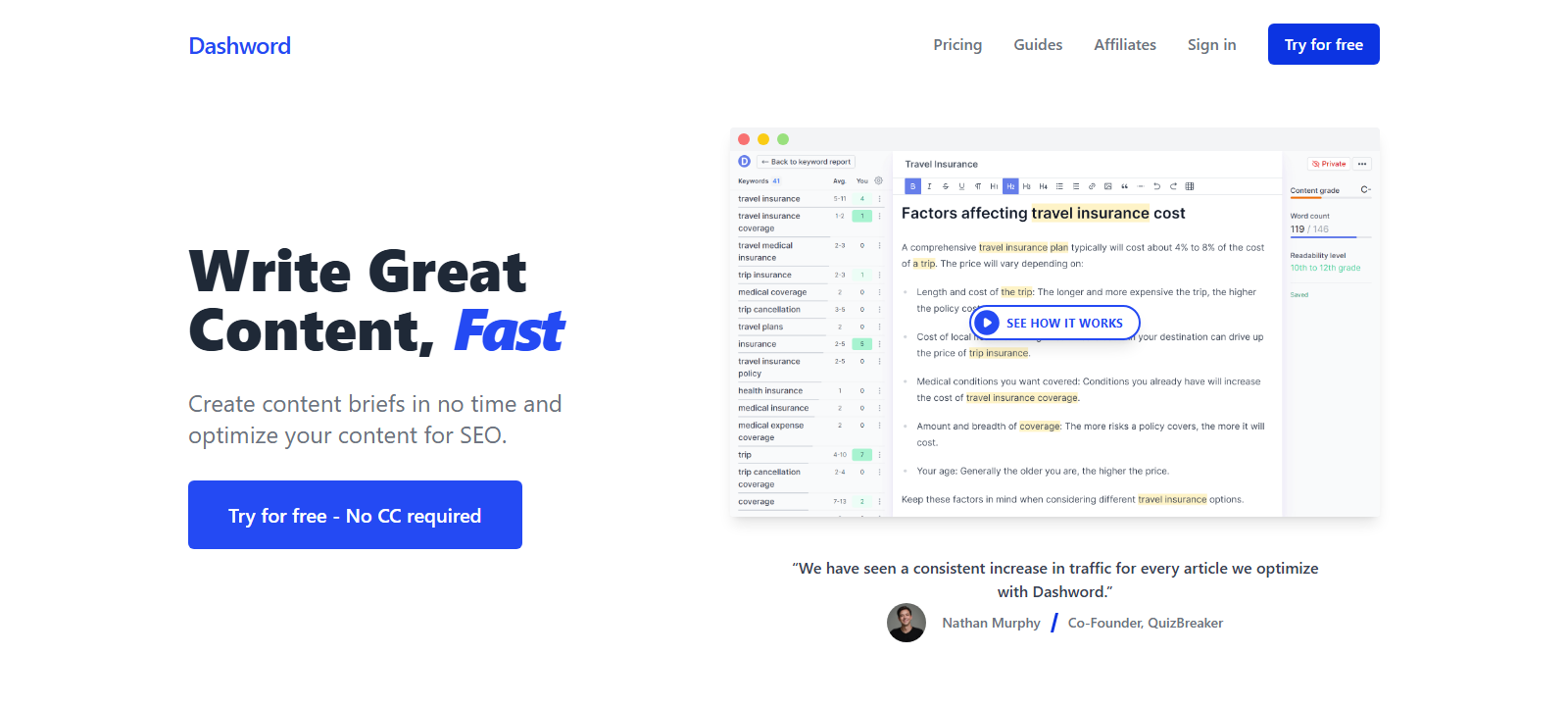
Dashword reduces the briefing and optimization process to the essentials. A user creates a report from a keyword and country, reviews competitor outlines and questions, assembles a brief, then writes against a live content score. Monitoring extends the workflow to published pages without turning the product into a full SEO suite.
The Startup plan costs $99 per month and includes 30 reports and five seats. That is twice Content Harmony's $50 starting fee, but it also provides a more direct writing experience for a small team. Content Harmony becomes more attractive when unlimited contributors, reusable brief templates, and research depth matter.
Dashword's advantage is not a longer feature list. It is a shorter learning curve. If nontechnical writers ignore a complex brief system but respond well to a clear score and visible suggestions, simplicity can produce more operational value.
Bottom line: Choose Dashword for low-friction writer execution. Choose Content Harmony for configurable strategist-led briefs and broader collaboration.
8. PageOptimizer Pro: Best for Technical On-Page Control
Best for: On-page SEO specialists who want granular recommendations beyond topic coverage and readability. Starting price: $40 per month for Basic. Free access: No-sign-up demo and a seven-day refund guarantee on paid plans. Choose it over Content Harmony if: You want page-factor analysis, E-E-A-T, schema guidance, and ongoing monitoring. Avoid if: Writers need an intuitive brief rather than a technical optimization system.
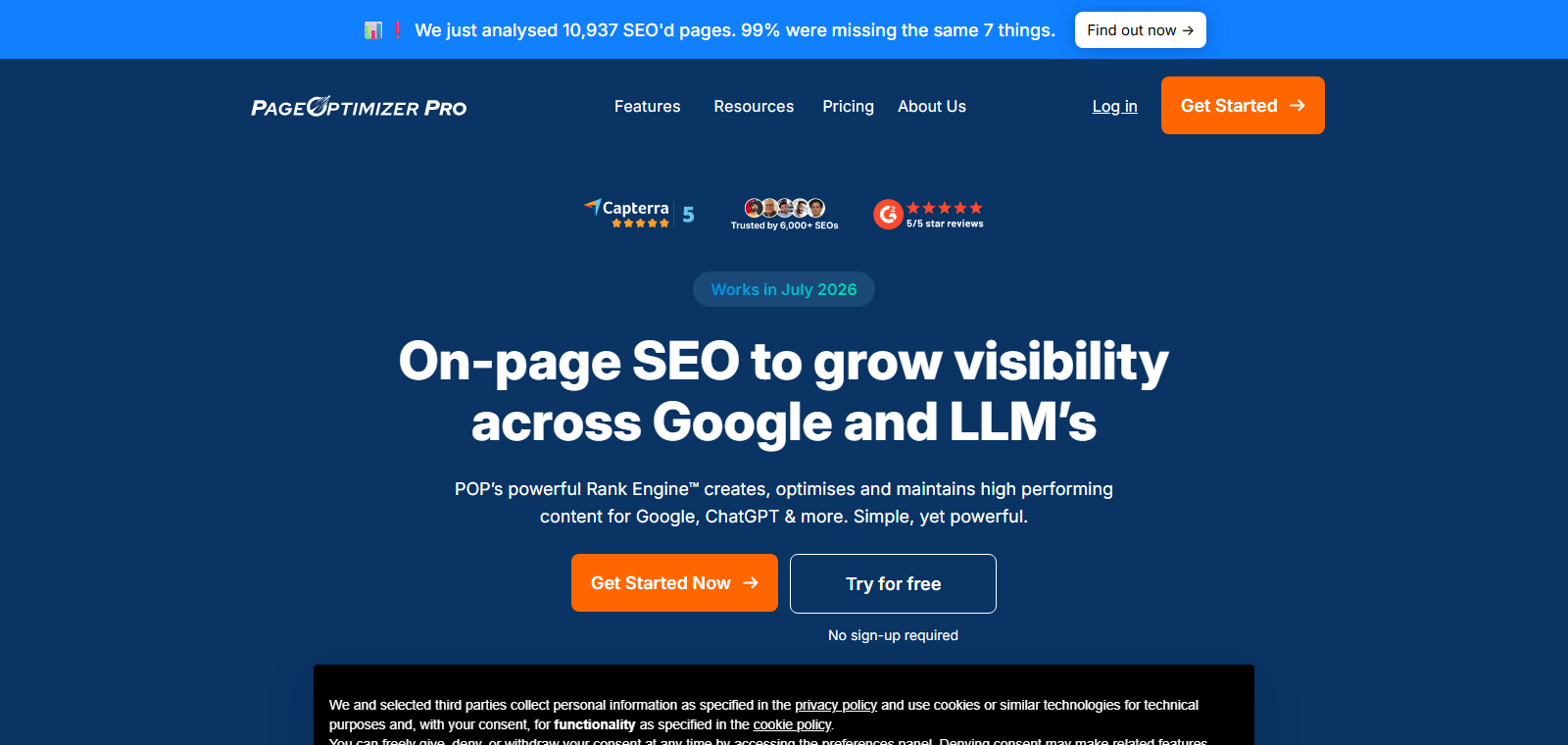
PageOptimizer Pro approaches content through a test-driven on-page SEO lens. Its POP Rank Engine produces recommendations, while related tools cover Google NLP, E-E-A-T analysis, schema, AI writing, and Watchdog monitoring. Recommendations can appear in Google Docs, WordPress, and many website editors.
Basic costs $40 per month and includes 20 shared credits plus 10 Watchdog pages. Unlimited costs $72, and Teams starts at $143 with subaccounts. Buyers must understand which actions consume credits and which reports are subject to fair-use terms.
Compared with Content Harmony, POP gives an SEO practitioner more technical control after a page exists. It is less suitable when a strategist needs to package intent, audience, sources, visual requirements, brand rules, and SME questions into a clean writer handoff.
Bottom line: Choose PageOptimizer Pro when technical optimization depth is the constraint. Choose Content Harmony when communication quality before drafting is the constraint.
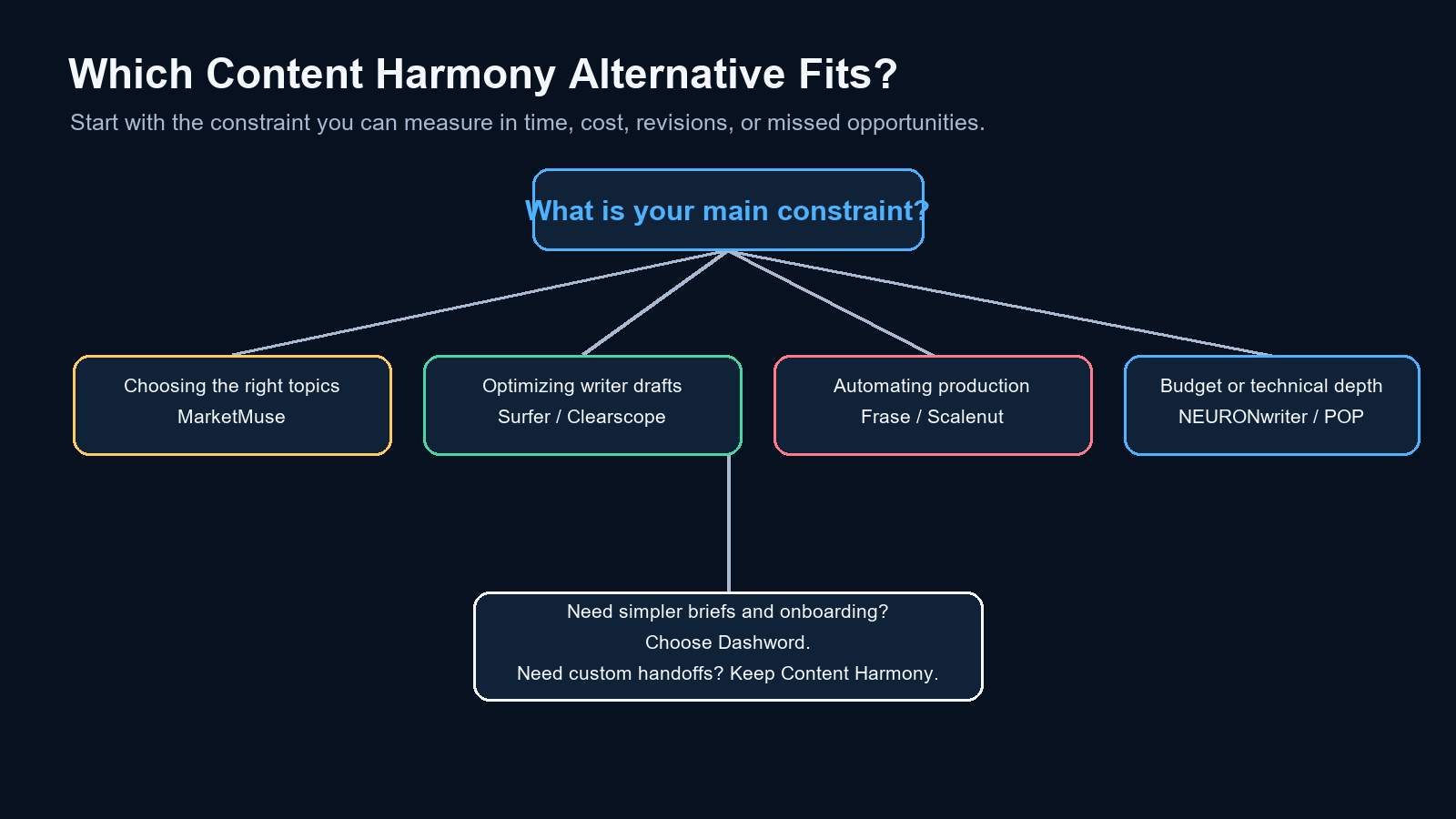
Match the Alternative to Your Actual Bottleneck
| Your main constraint | Best starting shortlist | Why |
|---|---|---|
| Lower monthly entry cost | NEURONwriter, PageOptimizer Pro | Both start below Content Harmony's $50 Standard 5 plan |
| Stronger live editing | Surfer, Clearscope, NEURONwriter | More editor-centric optimization guidance |
| End-to-end production | Frase, Scalenut | Research, generation, optimization, publishing, and monitoring |
| Site-level prioritization | MarketMuse | Inventory and authority-aware opportunity analysis |
| Fast writer onboarding | Dashword, Clearscope | Clearer scores and less technical friction |
| Technical on-page control | PageOptimizer Pro | E-E-A-T, schema, NLP, and Watchdog layers |
| Custom agency briefs | Content Harmony | Reusable templates, rich research, unlimited users/projects |
| Lowest-risk Content Harmony test | Content Harmony | Ten workflows cost $10 with no automatic renewal |
Run a pilot before migrating. Use the same target query, country, source requirements, existing draft, and editorial acceptance criteria in two products. Measure research time, brief cleanup, writer questions, revision rounds, publication steps, and total cost at your real output volume.
Do not choose a platform because its proprietary score looks more scientific. Choose it because the team consistently acts on the guidance and the workflow produces stronger pages with less rework.
For verified promotions and trial terms, see our Content Harmony coupon guide. Avoid third-party coupon directories that publish unverified codes or confuse the $10 trial with a free plan.
Frequently Asked Questions
What is the best overall Content Harmony alternative?
Surfer is the best general alternative when deeper live optimization is the main need. Frase is stronger for an end-to-end research, drafting, publishing, and monitoring workflow. MarketMuse is better for site-level strategy. There is no universal winner because each product replaces a different part of Content Harmony.
What is the cheapest close alternative to Content Harmony?
NEURONwriter has the lowest public monthly entry price in this shortlist at $23 per month. PageOptimizer Pro starts at $40. Compare the tier containing the projects, analyses, users, integrations, and API access you need rather than choosing only by the headline price.
Which Content Harmony alternative is best for agencies?
Content Harmony may still be the best fit for brief-led agencies because standard plans include unlimited users and projects. Frase is stronger for production automation, Surfer for optimization depth, and Clearscope for premium editorial collaboration. Model costs using clients, contributors, and monthly content volume.
Is there a free Content Harmony alternative?
MarketMuse offers a permanent free plan with one user and 10 monthly queries, but the free tier excludes content briefs. Dashword offers one free report. Several other tools provide time-limited trials. Content Harmony itself sells 10 workflows for $10 without automatic renewal.
Which alternative is best for content briefs?
Content Harmony remains the specialist choice for customizable, repeatable briefs passed from strategists to writers. Frase is better when the brief should continue into AI drafting and publishing. Dashword is better when the same user wants to move from SERP research to writing with minimal setup.
Which alternative is best for optimizing existing content?
Surfer and Clearscope provide polished live optimization, PageOptimizer Pro adds technical page analysis, and Frase adds auditing and ongoing monitoring. Choose based on whether the problem is writer guidance, technical diagnosis, or detecting pages that need a refresh.
Should I replace Content Harmony because another tool has more features?
Not automatically. Extra modules create value only when your team uses them. If Content Harmony already shortens research, improves briefs, reduces writer questions, and fits your monthly output, switching can add training and migration costs. Replace it only when a measurable constraint outweighs those benefits.