Search Atlas is difficult to replace with one product because it combines jobs that most vendors split apart: SEO research, OTTO SEO deployment, Content Genius, Atlas Agent, Smart Ads, local SEO, reporting, and LLM visibility. The right alternative therefore depends on what you actually want to replace.
| Alternative | Best for | Public pricing signal | Main advantage over Search Atlas |
|---|---|---|---|
| Semrush | Broad SEO and paid-search intelligence | SEO from $117.33/month annually; Semrush One from $165.17 | Deeper established research and advertising datasets |
| Ahrefs | Backlink and organic-search research | Lite from $129/month | Data-first analysis with changes kept under human control |
| SE Ranking | Cost-aware agencies | Core from $103.20/month annually; add-ons extra | Agency workflows, reporting, and approachable suite economics |
| Conductor | Enterprise SEO and AEO governance | Quote-based | Enterprise controls, monitoring, integrations, and scale |
| Alli AI | Technical SEO deployment across many sites | Business $249/month equivalent, billed annually | Direct rule-based implementation without a full marketing suite |
| Surfer | Content optimization and AI visibility | From $49/month | More focused editorial optimization workflow |
| BrightLocal | Local SEO and multi-location operations | Track from $41/month for one location | Deeper local rankings, listings, citations, and reputation tools |
| AgencyAnalytics | Client reporting and retention | $20/client/month billed annually | Stronger white-label reporting and cross-channel client intelligence |
| Search Atlas | Autonomous cross-channel execution | From $99/month | One system spanning SEO, content, ads, local, and AI visibility |
This guide compares eight credible alternatives for US agencies, SEO professionals, freelancers, and enterprise marketing teams. It does not pretend that a reporting platform or content editor is a complete Search Atlas clone. Instead, each option wins a specific buying decision where Search Atlas may be broader, more automated, or more operationally disruptive than you need.
Quick Answer: Which Search Atlas Alternative Should You Choose?
Choose Semrush when competitive research, keyword intelligence, market analysis, and PPC data matter more than autonomous deployment. Choose Ahrefs when backlink and organic-search research are the center of your workflow and your team wants to implement changes through its own CMS and development process.
SE Ranking is the practical agency-suite choice for teams balancing client reporting, SEO operations, and cost. Conductor is the enterprise answer when governance, integrations, large-site monitoring, and executive accountability outweigh self-serve pricing.
Choose Alli AI when the specific feature you want is OTTO-like implementation across websites, not Search Atlas's entire marketing stack. Pick Surfer for a focused content optimization operation, BrightLocal for location-based visibility, or AgencyAnalytics when reporting and client retention are the real bottlenecks.
Before switching, use our complete Search Atlas review as the baseline. Search Atlas starts at $99 per month and is strongest when one team will actually use its connected execution layer. Buying a specialist tool is smarter when you need depth in one workflow and would leave most of Search Atlas idle.
How We Selected These Search Atlas Alternatives
We evaluated products against the jobs Search Atlas asks buyers to consolidate:
- Research depth: keyword, backlink, competitor, market, and paid-search intelligence.
- Execution: whether the platform only recommends work or can deploy changes.
- Content operations: planning, briefing, optimization, publishing, and refresh workflows.
- Agency operations: multi-client views, permissions, white labeling, dashboards, and reporting.
- Paid media: campaign research, creation, monitoring, and optimization.
- AI-search visibility: monitoring mentions, citations, sentiment, and share of voice.
- Governance: approvals, rollback, auditability, integration risk, and human accountability.
- Real cost: plan limits, projects, seats, locations, clients, tracked prompts, and add-ons.
A product qualified by replacing the whole research suite or by solving one major Search Atlas job substantially better. We excluded generic AI writers, isolated keyword tools, and products with no meaningful overlap in SEO, content, visibility, implementation, or client operations.
Pricing and packaging were checked against official vendor pages available July 31, 2026. Dynamic and quote-based pages can change by region, usage, billing term, and account size. Verify the checkout screen and contract before committing.
This is an evidence-based editorial comparison, not a claim that all eight platforms were tested in identical paid accounts. Vendor automation claims should be validated on a controlled project before deployment to revenue-critical sites.
Search Atlas Alternatives Compared by Workflow
| Buying priority | Best first option | Why it leads | Important limitation |
|---|---|---|---|
| SEO plus PPC research | Semrush | Mature multi-channel intelligence | Less direct autonomous website execution |
| Backlinks and organic research | Ahrefs | Strong data exploration and familiar analyst workflow | Implementation remains your responsibility |
| Agency SEO value | SE Ranking | Broad agency-oriented suite and reporting | Less unified autonomous execution than Search Atlas |
| Enterprise governance | Conductor | Scaled monitoring, AEO, integrations, and controls | Sales-led buying and implementation |
| Direct technical deployment | Alli AI | Rule-based changes across sites and CMSs | Narrower research, content, ads, and reporting scope |
| Content optimization | Surfer | Focused editor and content workflow | Not a complete SEO, PPC, local, or agency platform |
| Local SEO | BrightLocal | Rankings, listings, citations, reputation, and locations | Not designed for broad organic and paid execution |
| Client reporting | AgencyAnalytics | White-label portals and cross-channel integrations | Reports on work more than it performs the work |
Why Look for an Alternative to Search Atlas?
Search Atlas's strength is also the first reason to consider an alternative: scope. A freelancer who only needs backlink research may not benefit from Smart Ads, local modules, Website Studio, authority workflows, and LLM visibility. A mature enterprise may already own systems for those jobs and cannot replace them without procurement, security, and data-governance work.
The second reason is implementation control. OTTO SEO and Atlas Agent are built to move from recommendation to execution. That can reduce ticket queues, but direct deployment changes the risk profile. Teams with regulated content, strict release management, custom rendering, or complex analytics may prefer a platform that produces evidence while their CMS and engineering workflow remain the only deployment path.
The third reason is specialist depth. Semrush and Ahrefs emphasize established research datasets. Surfer concentrates on editorial optimization. BrightLocal goes deeper into local visibility. AgencyAnalytics is designed around client communication. One specialist can beat a broad suite when that workflow directly affects revenue or retention.
Finally, compare utilization rather than sticker price. Search Atlas Starter costs $99 per month, but Growth, Pro, and Agency increase projects, seats, quotas, LLM access, and white-label capacity. A cheaper tool is not cheaper if you must add three more products. A broader tool is not better value if your team adopts only one module.
1. Semrush: Best for Broad SEO and Paid-Search Intelligence
Best for: Agencies and in-house teams that prioritize market, competitor, keyword, backlink, brand, and advertising research. Pricing signal: SEO starts at $117.33 per month billed annually or $139 monthly; the more comparable Semrush One starts at $165.17 annually or $199 monthly. Choose it over Search Atlas if: Research depth and strategic intelligence matter more than autonomous execution. Avoid if: Your primary goal is to deploy technical, content, and campaign changes from one agentic workflow.
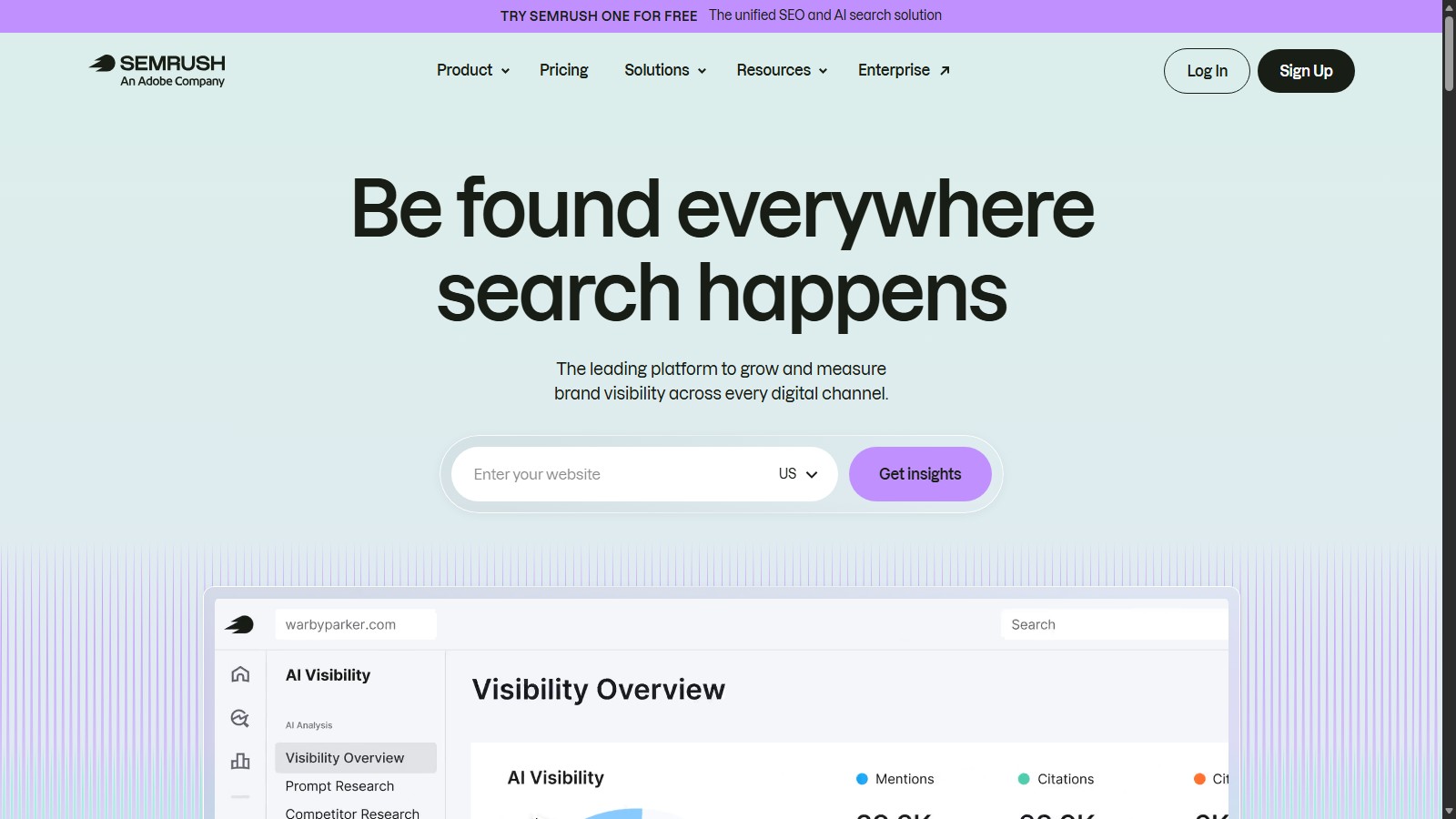
Semrush is the strongest broad-suite alternative when your analysts spend more time deciding where to compete than pushing routine changes live. Its platform covers keyword and competitor research, backlinks, site auditing, local visibility, content, market intelligence, and paid-search analysis. That makes it especially relevant to agencies supporting both SEO and PPC strategy.
The difference is operational philosophy. Search Atlas markets Atlas Agent, OTTO SEO, and Smart Ads as connected execution systems. Semrush is more naturally a data and workflow environment: it surfaces opportunities and supports planning, but teams commonly keep final implementation in their advertising accounts, CMS, project manager, and engineering queue.
That separation can be a benefit. Enterprise teams may want recommendations to pass through legal, brand, analytics, and release controls. Agencies may also prefer to prove decisions with familiar datasets before asking clients to approve changes.
Pricing requires careful modeling. The basic SEO package is not equivalent to the complete Search Atlas workflow. Projects, users, historical data, local capabilities, AI visibility, and specialized modules can change the bill. Compare the required Semrush or Semrush One package against the Search Atlas plan that supports your number of sites and team members.
Bottom line: Semrush is better for evidence-heavy SEO and PPC research. Search Atlas is better when the purchase is meant to replace analysis-to-execution handoffs.
2. Ahrefs: Best for Backlink and Organic-Search Research
Best for: SEO professionals and teams centered on backlinks, competitor content, keywords, rankings, and organic opportunity analysis. Starting price: Lite is publicly listed from $129 per month. Choose it over Search Atlas if: You want a mature data-first research workflow and deliberately manual implementation. Avoid if: You expect one platform to create ads, deploy site changes, publish content, and manage local visibility.
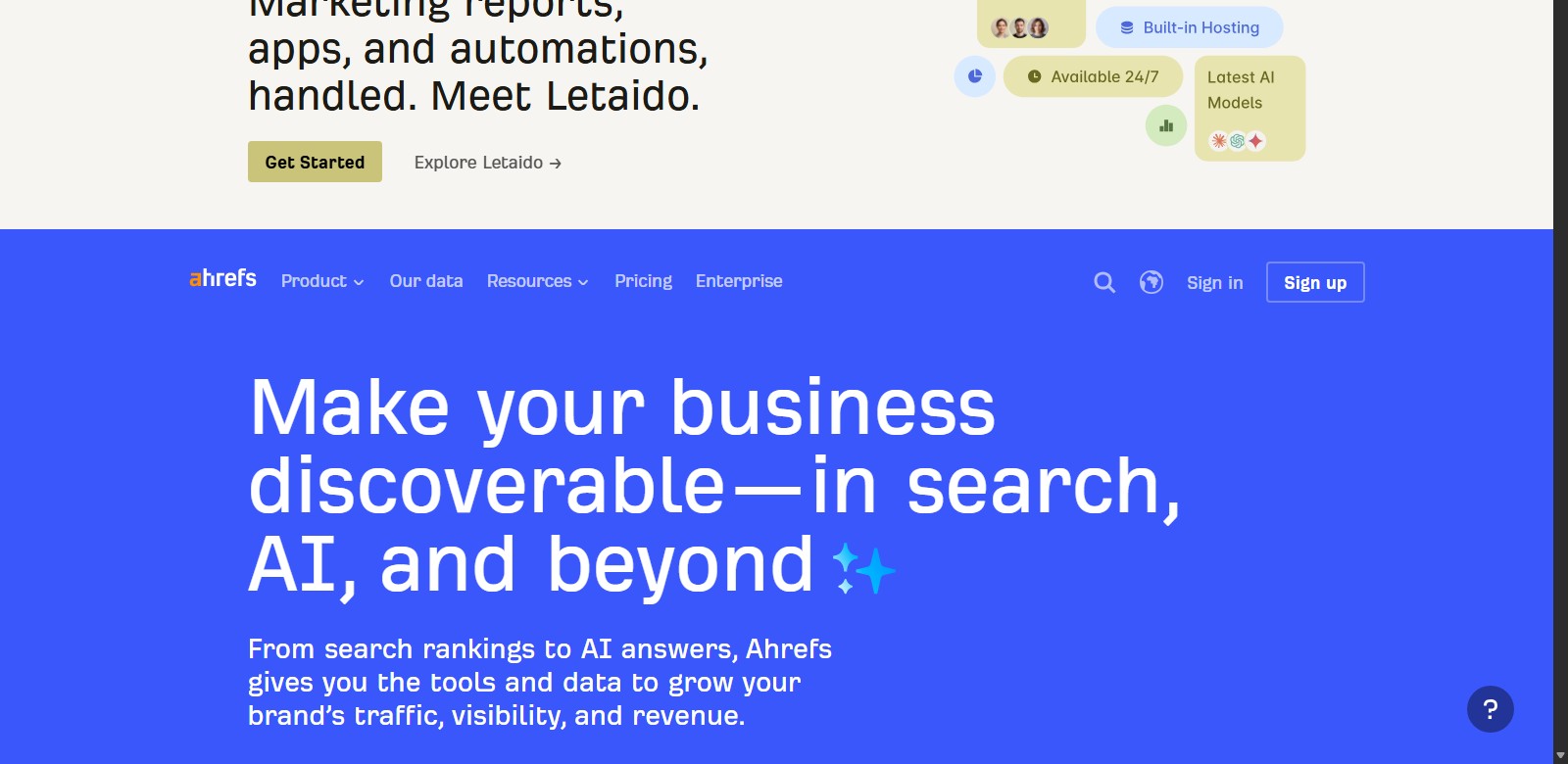
Ahrefs remains a logical alternative for specialists who judge an SEO platform by the questions its index can answer. Site Explorer, Keywords Explorer, Content Explorer, rank tracking, site auditing, and newer AI visibility capabilities support research without trying to become an autonomous marketing operator.
That makes Ahrefs easier to fit into an established operating model. Analysts investigate a traffic decline, find link gaps, evaluate a competitor, or prioritize content. Writers, developers, and outreach teams then execute through controlled systems. There is more manual coordination, but ownership is explicit.
Compared with Search Atlas, Ahrefs is narrower. It does not replace Smart Ads, a full Content Genius publishing operation, local profile management, or OTTO-style direct deployment. An agency may still need a content optimizer, reporting portal, PPC platform, and implementation process.
The cost decision therefore depends on stack design. Ahrefs can be excellent value when backlink and search intelligence are the core billable service. It becomes less economical if the team buys several adjacent tools to reproduce the Search Atlas bundle.
Bottom line: Choose Ahrefs for research confidence and manual control. Choose Search Atlas when reducing the work between diagnosis and deployment is the main goal.
3. SE Ranking: Best for Cost-Aware Agency Operations
Best for: Small and midsize agencies needing research, rank tracking, audits, reporting, collaboration, and AI visibility in one approachable suite. Starting price: Core is $103.20 per month billed annually or $129 monthly; AI Search and Agency Pack are separately priced. Choose it over Search Atlas if: Agency usability and predictable day-to-day SEO operations matter more than agentic execution. Avoid if: You specifically want OTTO-like live changes or broad autonomous campaign deployment.
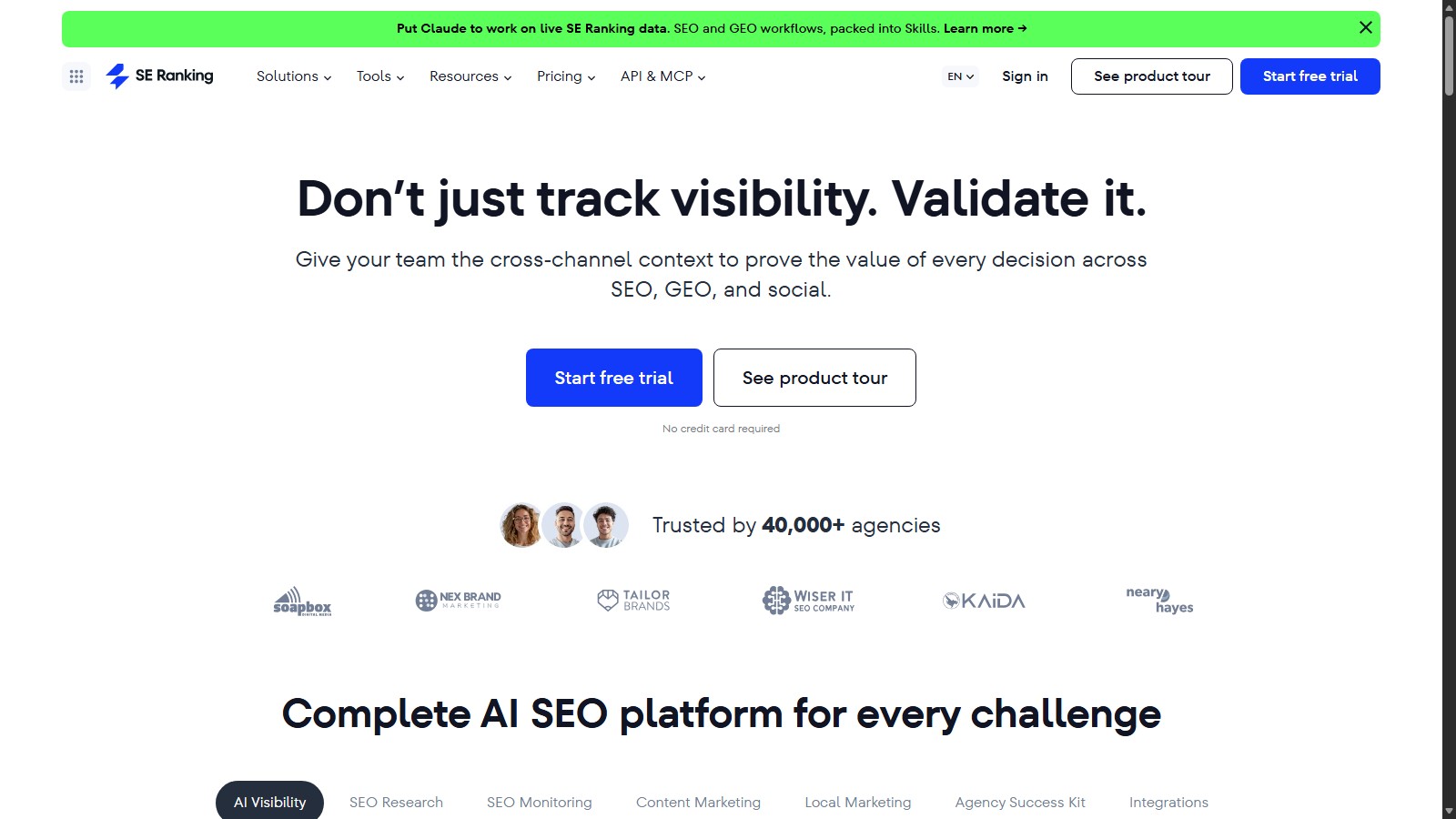
SE Ranking occupies the practical middle ground between specialist tools and enterprise platforms. It combines keyword tracking, competitive and backlink research, site audits, content marketing, local tools, AI-search visibility, and agency reporting. For many client-service teams, that is enough coverage without the organizational change implied by an autonomous execution platform.
Its advantage is operational familiarity. Account managers can monitor projects, generate reports, and keep research connected to client deliverables. White-label and agency features make it easier to present work without building a separate reporting stack.
Search Atlas goes further when it uses Atlas Agent, OTTO, content publishing, and Smart Ads to perform work. SE Ranking is typically stronger as a manageable SEO system of record than as an autonomous worker. That distinction matters: a team that already has reliable specialists may want visibility and coordination, not another deployment layer.
Model cost against keyword limits, websites, users, report requirements, and AI visibility usage. The AI Search add-on starts at $71.20 per month billed annually or $89 monthly, while Agency Pack starts at $69 per month on annual billing. Entry pricing can look favorable, but a comparable agency configuration costs more than Core alone.
Bottom line: SE Ranking is the sensible agency-suite alternative. Search Atlas wins if automation is expected to replace recurring production work rather than simply organize it.
4. Conductor: Best for Enterprise Governance and AEO
Best for: Large organizations requiring enterprise SEO, AEO, site monitoring, integrations, permissions, reporting, and governed content workflows. Pricing: Sales-led and quote-based; official plans include Essentials, Growth, and Enterprise. Choose it over Search Atlas if: Governance, scale, support, and enterprise integration are non-negotiable. Avoid if: You need transparent self-serve pricing and fast adoption by a solo operator or small agency.
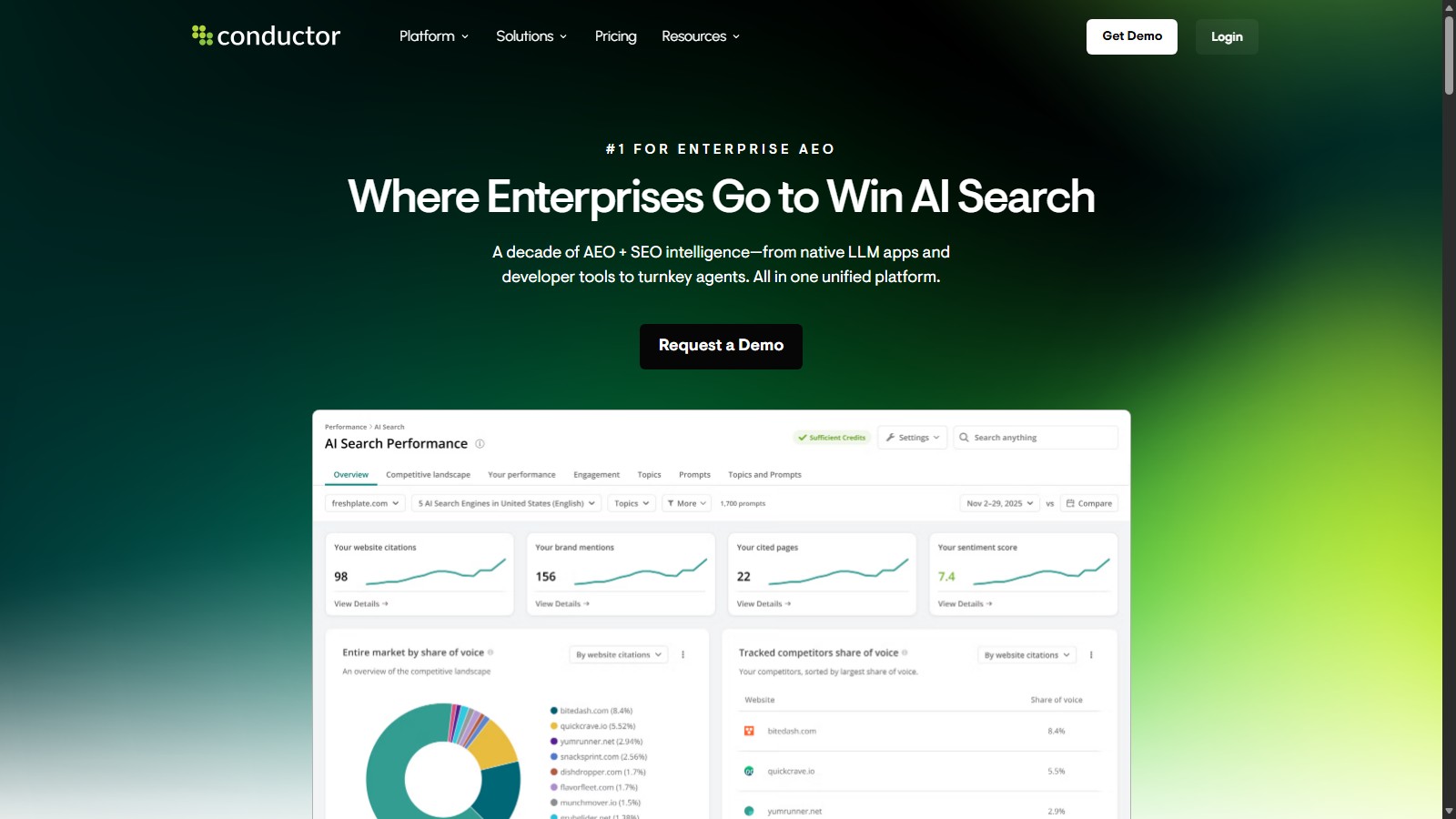
Conductor is not the budget alternative. It is the alternative for organizations where SEO touches multiple business units, large web estates, security reviews, analytics systems, and executive reporting. Its current platform combines AI and search visibility, content creation, technical monitoring, and AgentStack workflows.
Official plan descriptions show the scale difference. Essentials supports smaller teams establishing SEO and AEO foundations. Growth expands analyzed pages, tracked keywords, competitors, monitoring, and AI-search usage. Enterprise adds advanced reporting, governance, and substantially larger limits.
Search Atlas is more accessible and more explicit about autonomous deployment across SEO, ads, content, and local marketing. Conductor's value is organizational fit: ongoing site health, enterprise data, collaboration, integrations, and a buying process designed around complex programs.
The trade-off is time and total ownership cost. Sales evaluation, procurement, onboarding, data integration, and training can outweigh subscription pricing. Enterprise buyers should require a pilot with success criteria tied to implementation speed, issue resolution, content throughput, and AI-search reporting.
Bottom line: Conductor is the governance-first choice for enterprise SEO and AEO. Search Atlas is the faster, broader execution choice for teams that can operate within its product model.
5. Alli AI: Best for Direct Technical SEO Deployment
Best for: Agencies and portfolio owners that need scalable on-page and technical deployment without waiting for CMS or engineering tickets. Pricing: Business is $249 per month equivalent, billed $2,990 annually; Agency is $499 per month equivalent, billed $5,990 annually. Choose it over Search Atlas if: Your problem is implementation across websites, not replacing the entire marketing stack. Avoid if: You need deep research, PPC management, content operations, client reporting, and local SEO in the same subscription.
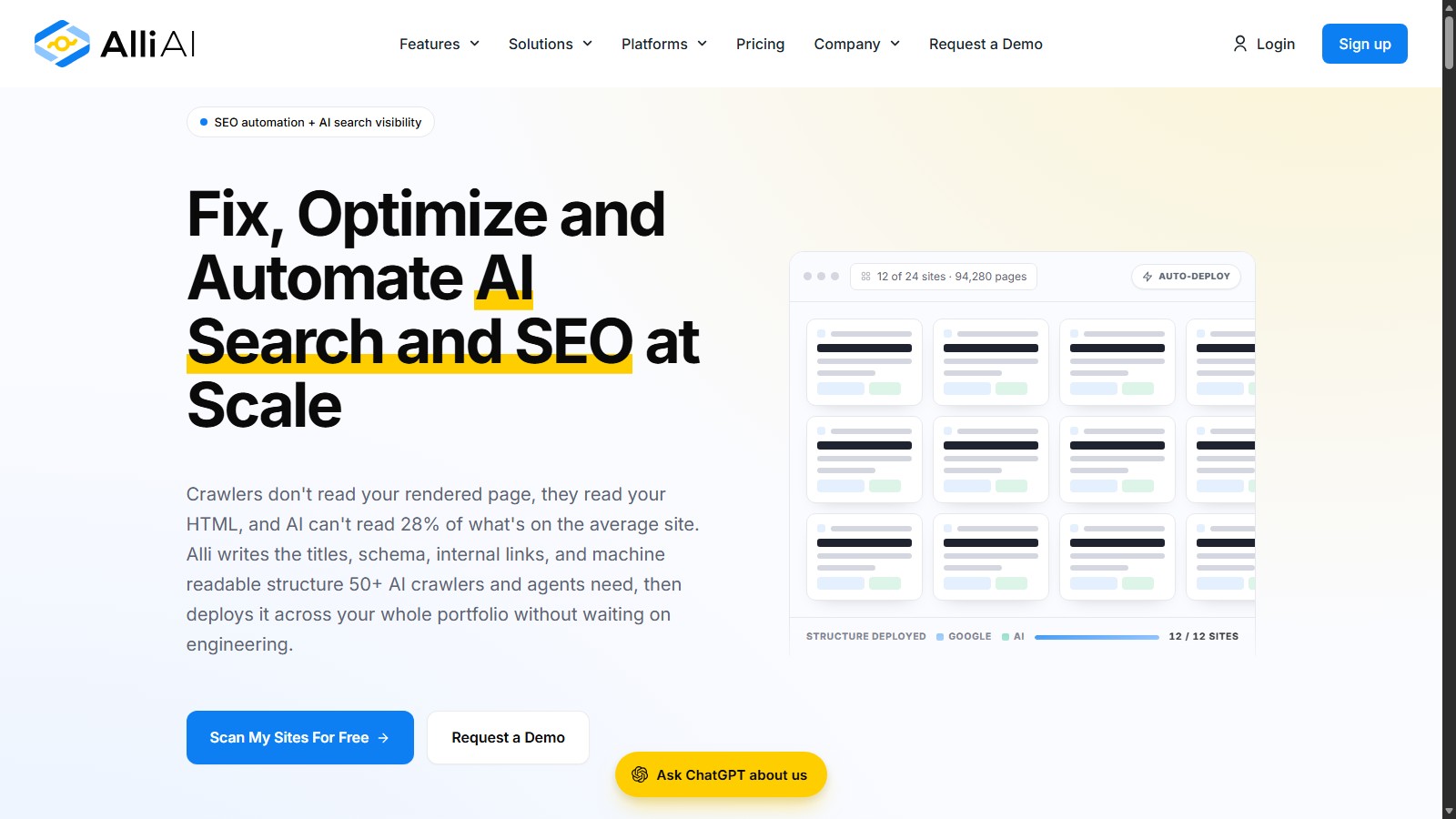
Alli AI is the closest specialist alternative to the execution logic behind OTTO SEO. It installs through supported CMS and integration methods, then lets teams deploy rule-based changes across large page sets and multiple sites. Official materials emphasize AI-crawler accessibility, bulk implementation, a visual editor, schema and metadata work, and portfolio-scale deployment.
The narrower scope is the point. An agency that already trusts its research, content, reporting, and paid-media stack may only need to remove the implementation bottleneck. Alli AI can address that without asking the organization to migrate every workflow into a new platform.
Official pricing also lists a 10-day trial. Direct deployment still needs governance. Start with a noncritical property, document baselines, restrict the first rules to reversible changes, inspect rendered HTML, monitor analytics and Search Console, and establish rollback ownership. Automation reduces labor; it does not remove accountability for canonical tags, schema, internal links, or template-level errors.
Compared with Search Atlas, Alli AI does less. It is not a complete replacement for Atlas Agent, Smart Ads, Content Genius, LLM visibility, local operations, and white-label reporting. It may, however, be the cleaner purchase when technical execution is the only urgent gap.
Bottom line: Choose Alli AI for focused, scalable implementation. Choose Search Atlas when execution must connect to research, content, ads, local visibility, and reporting.
6. Surfer: Best for Content Optimization Workflows
Best for: Content teams that want structured briefs, live optimization, content refreshes, internal linking, and AI-search visibility. Starting price: Discovery is $49 per month; Standard is $99 per month. Choose it over Search Atlas if: Editorial quality and writer adoption matter more than broad marketing automation. Avoid if: You need backlink research, technical deployment, paid campaigns, local SEO, and agency reporting in one product.
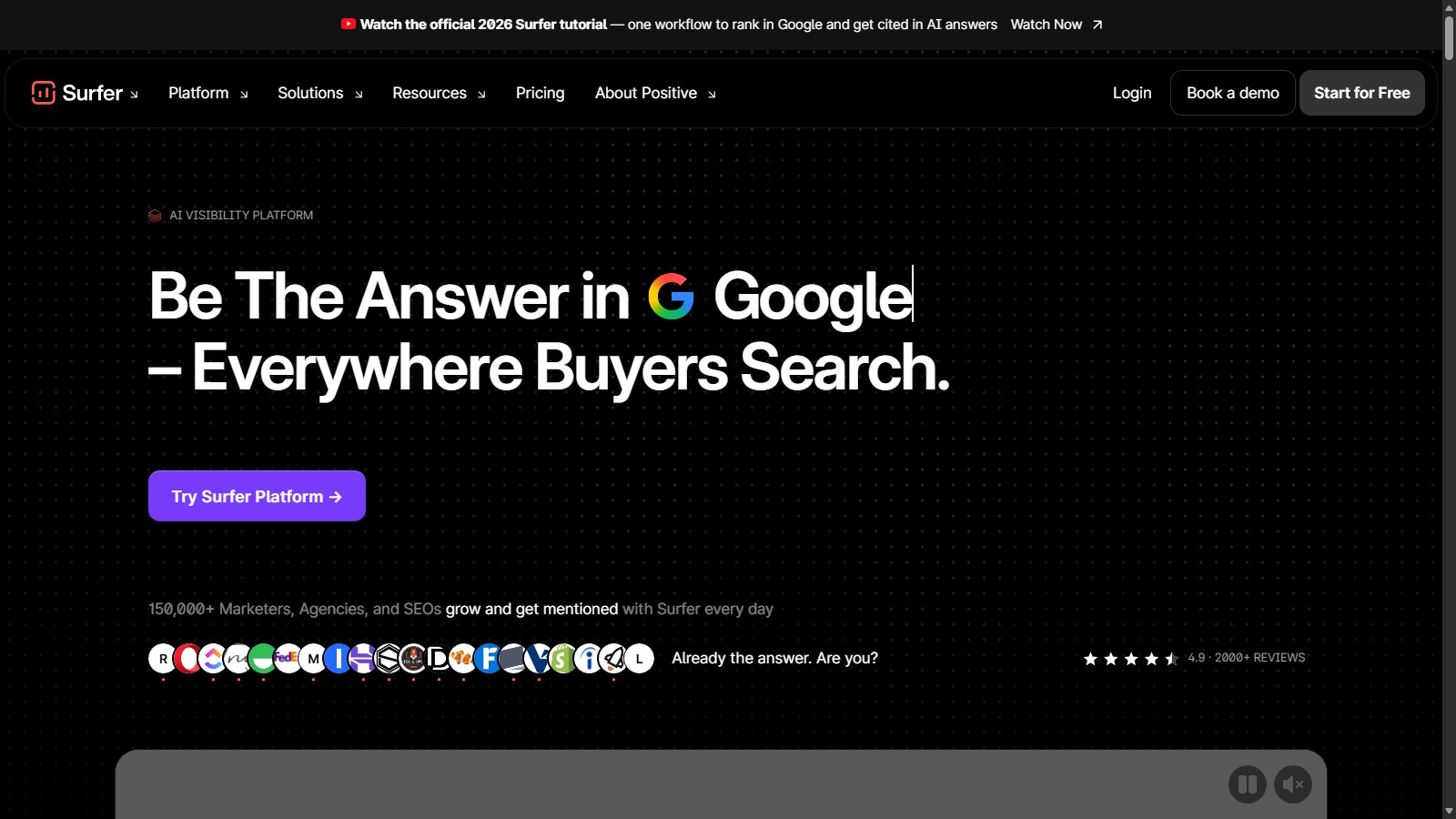
Surfer is the better alternative when the content editor, not the marketing agent, is the operating system. It turns SERP evidence into topic guidance, content scores, structural recommendations, and optimization workflows that writers can use while drafting or refreshing pages.
Current official pricing positions Discovery at $49 per month, Standard at $99, Pro at $182, and higher tiers for larger operations. Plan limits cover documents, AI prompts, workspaces, integrations, internal linking, API access, and support. Teams should compare the plan they actually need rather than treating the lowest price as equivalent.
Search Atlas offers broader content generation and publishing inside a suite that also handles technical, authority, ads, and visibility work. Surfer is deliberately more focused. That can improve training, editorial adoption, and quality review because writers are not navigating an entire agency platform.
Neither content score nor AI draft proves accuracy or usefulness. Keep subject-matter review, source verification, originality, brand voice, and conversion intent outside the score.
Bottom line: Choose Surfer when content optimization is the bottleneck. Search Atlas is the better consolidation play when content is only one part of a connected execution program.
7. BrightLocal: Best for Local SEO and Multi-Location Visibility
Best for: Agencies, franchises, and local businesses managing rankings, listings, citations, reviews, and location-level reporting. Pricing signal: After the July 1, 2026 increase, Track starts at $41 per month for one location or $369 per year. Choose it over Search Atlas if: Local visibility and reputation operations are your primary deliverables. Avoid if: You need broad national SEO, content production, backlink intelligence, or paid-search automation.
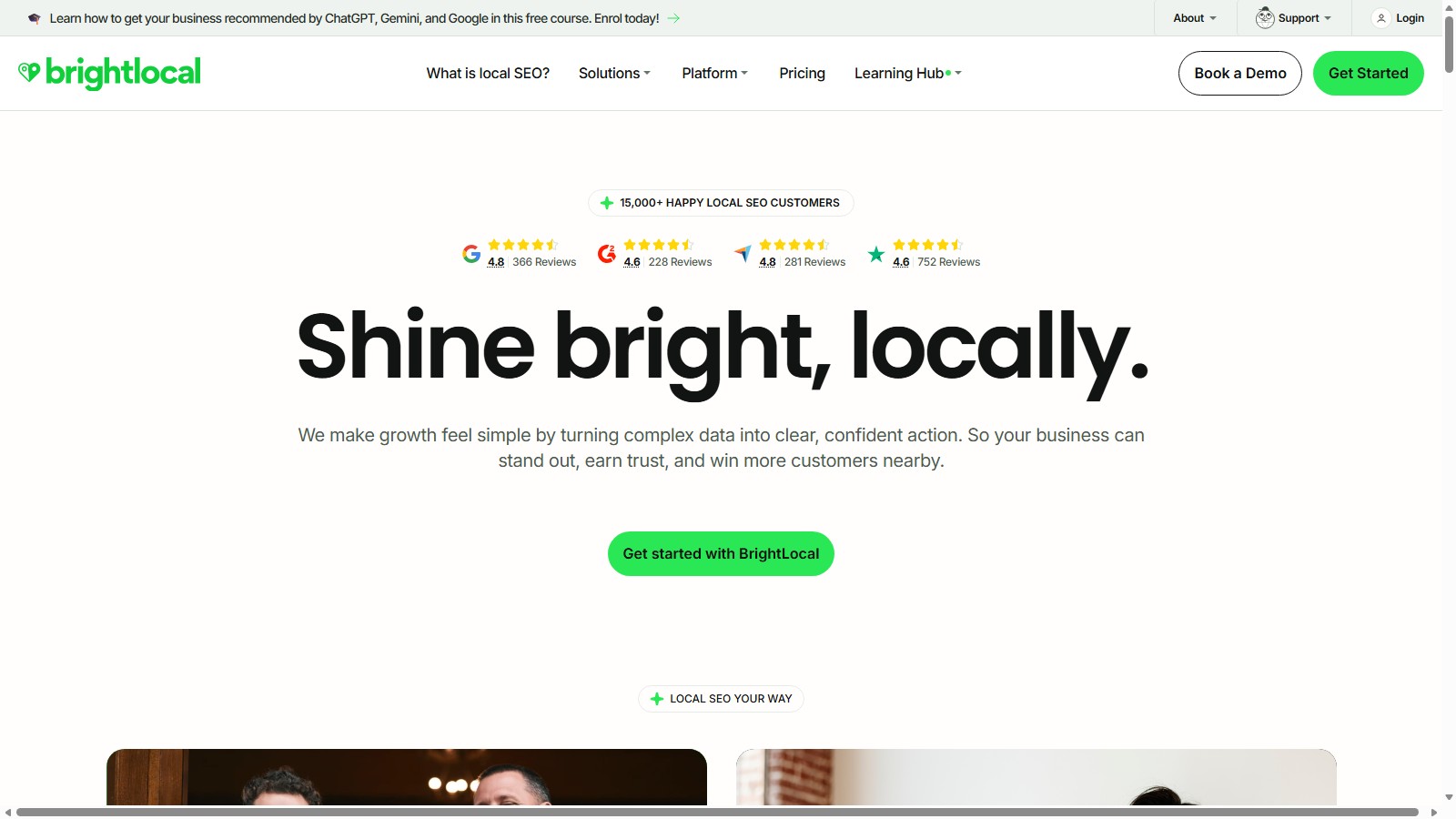
BrightLocal is a specialist alternative to Search Atlas's local features. It focuses on local rank tracking and grids, listings management, citation work, reputation monitoring, Google Business Profile analysis, and multi-location operations. Agencies can use those capabilities to productize a local service without paying for unrelated content and PPC automation.
The product's depth matters when location accuracy, review velocity, neighborhood rankings, and client-ready local reports determine retention. Search Atlas may offer a broader connected system, but breadth does not automatically beat a workflow built specifically around locations.
Pricing is usage-sensitive. Track starts at $41 per month for one location, while Manage and Grow cost more and 100-plus-location plans use custom pricing. The total also changes with location volume, billing term, citation services, and API usage. Build a sample account matching your actual locations before comparing totals.
BrightLocal is not a drop-in replacement for Search Atlas. Agencies will still need broader keyword and competitor research, content, technical implementation, PPC, and AI-search workflows. It wins when local SEO is a dedicated service line rather than one box inside a general marketing platform.
Bottom line: Choose BrightLocal for local depth. Choose Search Atlas when local work must share one operating layer with organic, content, ads, and authority campaigns.
8. AgencyAnalytics: Best for Client Reporting and Retention
Best for: Marketing agencies that need automated cross-channel reports, white-label portals, AI summaries, alerts, benchmarks, and client communication. Starting price: $20 per client per month when billed annually, with all core features listed; add-ons cost extra. Choose it over Search Atlas if: Reporting consistency and client retention matter more than autonomous SEO execution. Avoid if: You expect the platform itself to research, optimize, and deploy the campaigns it reports on.
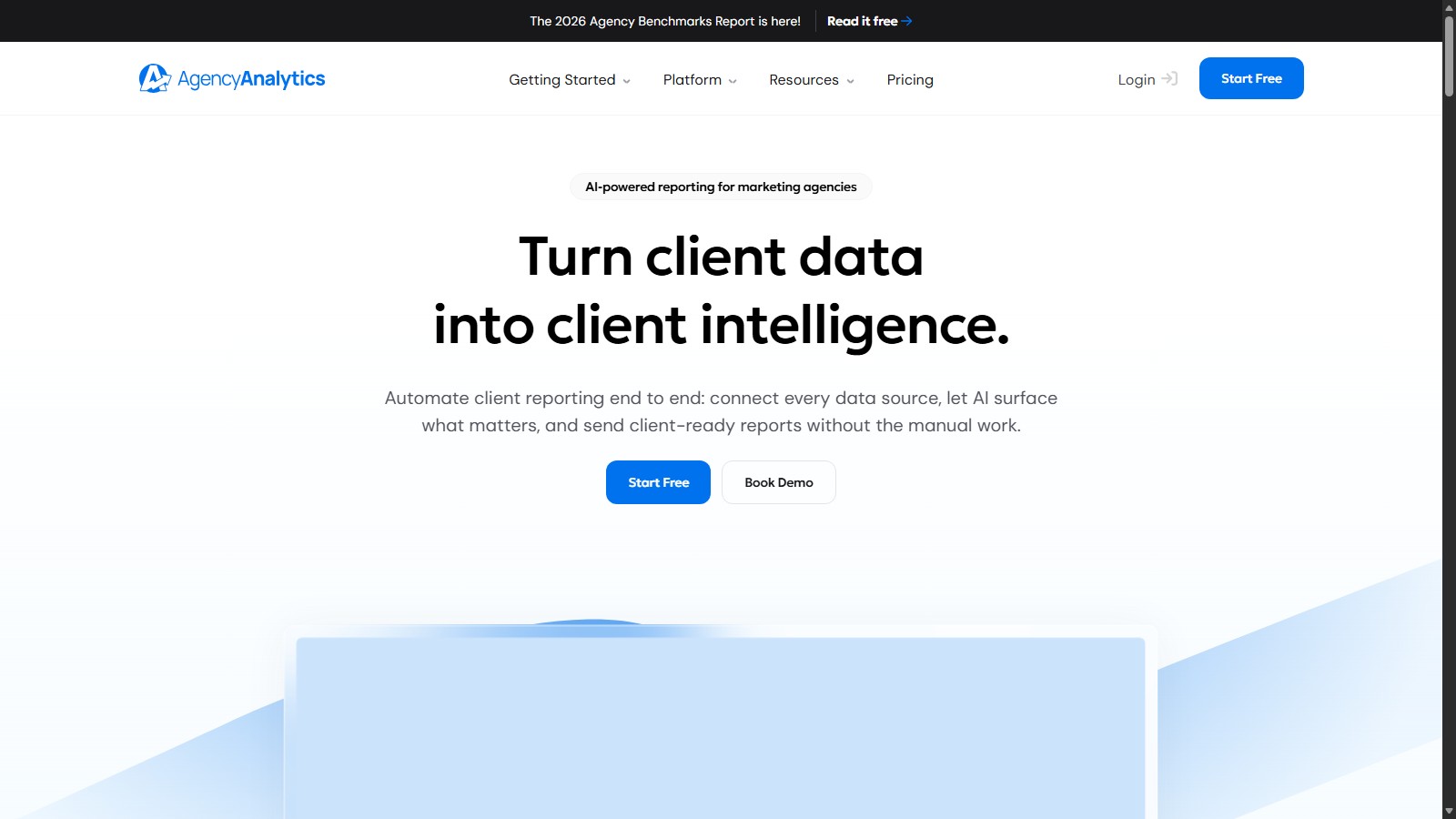
AgencyAnalytics replaces one important part of Search Atlas exceptionally well: proving work to clients. It connects data sources, automates dashboards and reports, provides white-label portals, supports goals and anomaly detection, and uses AI to surface changes worth discussing.
The current pricing model is unusually easy to understand: $20 per client per month billed annually, with unlimited data sources, reports, staff users, and client users in the published core offer. AI tracking and rank tracking are separate add-ons, so compare the complete setup rather than only the client rate.
Its weakness as a Search Atlas alternative is equally clear. AgencyAnalytics reports and interprets campaign data; it does not replace OTTO SEO, Content Genius, Smart Ads, or Atlas Agent. You still need the people and tools that perform the work.
For established agencies, that separation can be desirable. Specialists remain accountable for SEO and PPC execution, while account managers use one reliable communication layer. For lean teams trying to reduce headcount and tool switching, Search Atlas's execution promise may be more valuable.
Bottom line: Pick AgencyAnalytics when client intelligence is the product gap. Pick Search Atlas when the work itself, not just the report, needs automation.
When Search Atlas Is Still the Better Choice
Search Atlas remains the stronger choice when your team genuinely wants to consolidate and will operationalize the full platform. Its current plans connect Atlas Agent, OTTO SEO, Content Genius, Smart Ads, Website Studio, local tools, authority workflows, reporting, and LLM visibility.
That breadth is most valuable in three situations:
- A lean agency must increase output without matching headcount growth. Connected automation can remove repeated research, implementation, publishing, and reporting handoffs.
- A multi-site operator has an execution backlog. Recommendations have little value when technical, on-page, and content changes wait weeks to ship.
- The stack is fragmented and underused. Replacing several partially adopted subscriptions may produce more savings than choosing the cheapest specialist.
The platform is less compelling if deployment must pass through strict engineering controls, if one specialist dataset drives most revenue, or if the organization already has mature systems for content, ads, analytics, local SEO, and reporting.
Use the Search Atlas free trial on a low-risk project. Measure setup time, recommendations approved, changes shipped, errors caught, content throughput, reporting time, and actual hours saved. Do not evaluate an autonomous platform only by how many features appear in the menu.
How to Choose Without Rebuilding Your Stack Twice
Start by naming the bottleneck in one sentence. “We need better SEO” is not specific enough. Better statements include “technical recommendations wait three weeks for deployment,” “PPC and SEO research are disconnected,” “writers ignore our optimization tool,” or “account managers spend ten hours per client on reports.”
Then run a controlled comparison:
- Inventory current tools and owners. Include subscription cost, seats, integrations, renewal dates, and the person accountable for each workflow.
- Calculate utilization. Count active projects, reports, optimized pages, deployed changes, and campaigns, not available features.
- Choose one representative project. Avoid the easiest site and the most business-critical site.
- Define success before trialing. Track time to insight, time to deployment, QA defects, adoption, and client or revenue impact.
- Test rollback and export. Confirm what happens when an automation fails or the subscription ends.
- Price the required plan. Include users, projects, prompts, locations, clients, add-ons, onboarding, and internal implementation labor.
- Decide who remains accountable. AI can propose or perform work, but a named human should own budgets, brand claims, technical releases, and final quality.
If you keep Search Atlas, our Search Atlas tutorial shows how to stage the rollout with approvals and measurable baselines. Before paying, check the Search Atlas coupon and trial guide for currently verifiable savings rather than relying on unverified coupon sites.
Frequently Asked Questions
What is the best overall Search Atlas alternative?
Semrush is the strongest broad alternative for teams prioritizing established SEO, competitor, market, and paid-search intelligence. It is not a direct replacement for OTTO-style deployment. The best alternative changes if your main job is backlinks, content, local SEO, technical implementation, enterprise governance, or client reporting.
Is Semrush better than Search Atlas?
Semrush is generally better for broad research and established multi-channel datasets. Search Atlas is better positioned for connected execution through Atlas Agent, OTTO SEO, Content Genius, and Smart Ads. Choose based on whether your bottleneck is insight or implementation.
Is Ahrefs a complete replacement for Search Atlas?
No. Ahrefs can replace much of the backlink, keyword, competitor, audit, and rank-research workflow. It does not replace Search Atlas's full content publishing, paid campaign automation, local operations, and direct SEO deployment.
Which alternative is closest to OTTO SEO?
Alli AI is the closest specialist in this list because it emphasizes scalable on-page and technical deployment across sites. It is much narrower than Search Atlas, so agencies may still need separate research, content, reporting, local, and paid-media tools.
Which Search Atlas alternative is best for content teams?
Surfer is the best fit when live content optimization, writer adoption, briefs, refreshes, and AI visibility are the priority. It is a specialist content platform rather than a complete agency marketing operating system.
Which option is best for enterprise teams?
Conductor is the governance-first choice for large SEO and AEO programs requiring enterprise monitoring, integrations, collaboration, and support. Semrush may be better where broad market and paid intelligence lead the decision.
Which option is best for local SEO agencies?
BrightLocal is the specialist choice for local rankings, citation management, listings, reputation, and multi-location workflows. Search Atlas is broader when local SEO must connect directly to content, technical SEO, paid campaigns, and authority work.
Can AgencyAnalytics replace Search Atlas?
Only for reporting. AgencyAnalytics can centralize data, automate client reports, provide white-label portals, and improve account communication. It does not perform the underlying SEO, content, and advertising work in the way Search Atlas aims to.
Is Search Atlas cheaper than building a specialist stack?
It can be. Search Atlas starts at $99 per month, while several specialists can exceed that total quickly. The comparison depends on projects, seats, usage limits, add-ons, and whether your team actually adopts the connected automation. Unused breadth is not savings.
Should agencies allow automatic SEO deployment immediately?
No. Start on a low-risk site, establish analytics and crawl baselines, use approval mode, limit the first changes to reversible actions, inspect rendered output, and test rollback. Expand automation only after the workflow produces stable results under human review.