WordHero combines one-click blog generation, a Long-Form Editor, Brand Voices, an SEO Keyword Assistant, AI images, and multilingual writing. It is convenient, but its balance of automation, optimization, brand control, and usage limits will not fit every content operation.
| At a glance | Details |
|---|---|
| Best overall alternative for brand governance | Jasper |
| Best for affiliate-focused articles | KoalaWriter |
| Best for bulk WordPress production | SEO Writing AI |
| Best for AI-search visibility workflows | Writesonic |
| Best for end-to-end SEO planning | Scalenut |
| Best for briefs and editor-led optimization | Frase |
| Best budget alternative | Rytr |
| Best for long-form SEO automation | Junia AI |
| WordHero subscription option | Check current WordHero subscriptions |
| WordHero lifetime option | Check the current WordHero lifetime offer |
The right replacement depends on the bottleneck you need to remove. A brand team needs stronger governance than a solo affiliate publisher. An agency needs workflow separation and predictable capacity. A search-led team may value briefs, SERP evidence, and refresh workflows more than unlimited first-draft generation. Start with our WordHero review to establish the product baseline, then compare the alternatives below against the same real brief.
What Is the Best WordHero Alternative?
Jasper is the strongest overall WordHero alternative for organizations that prioritize repeatable brand voice and marketing governance, while KoalaWriter, SEO Writing AI, and Frase are better choices for narrower SEO workflows. There is no universal winner.
Choose by primary constraint:
- Choose Jasper when campaigns, brand consistency, and team controls matter most.
- Choose KoalaWriter when affiliate and informational articles are the core output.
- Choose SEO Writing AI when bulk queues and WordPress handoff drive the business case.
- Choose Writesonic when content production is tied to AI-search monitoring or generative-engine visibility.
- Choose Scalenut when keyword planning, briefs, optimization, and content production should live in one SEO workflow.
- Choose Frase when human editors want research and optimization guidance before automation.
- Choose Rytr when price and short-form speed matter more than deep SEO workflow.
- Choose Junia AI when long-form generation, brand context, and SEO automation need a simpler middle ground.
Do not migrate because another homepage promises better content. Run the same keyword, sources, brand rules, article type, and QA checklist through two tools. Compare accepted output rather than generation speed.
Why Look for an Alternative to WordHero?
WordHero is easiest to replace when its fair-use controls, Enhanced Mode token allocation, SEO project limits, or workflow depth become the constraint. The current public yearly pricing displays Creator at $29 per month billed $348 yearly and Infinity at $79 per month billed $948 yearly during its displayed annual sale. Public limits and promotional terms can change, so verify checkout before committing.
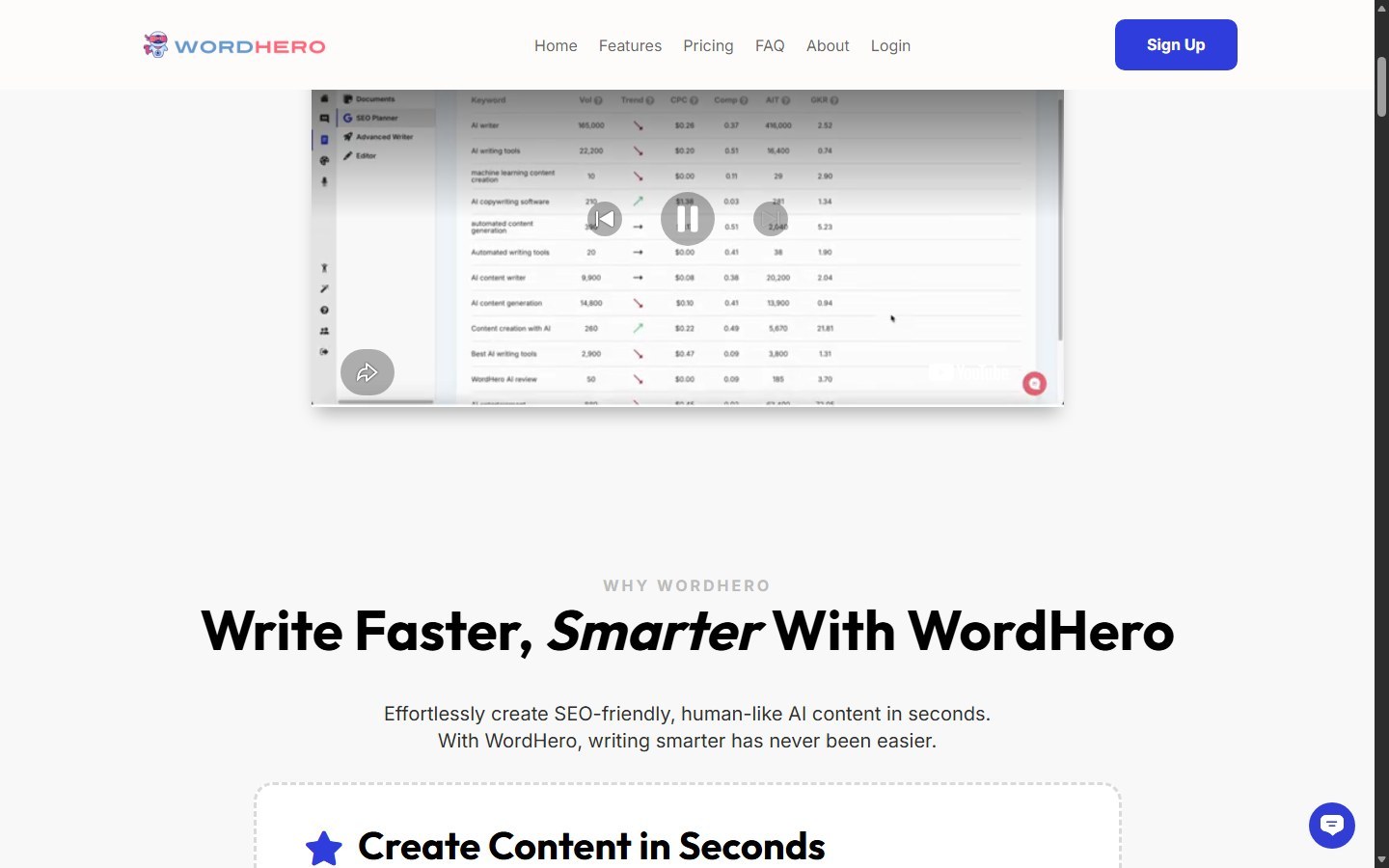
Creator currently advertises unlimited standard generation under a fair-use policy, 160,000 Enhanced Mode tokens, 20 Brand Voices, five SEO projects, 320 keywords, and 320 WordHero Art credits. Infinity advertises unlimited Enhanced Mode under fair use, 50 Brand Voices, 50 SEO projects, 1,000 keywords, 1,000 Art credits, and up to five team members. Both include the Long-Form Editor, Keyword Assistant, WordHero Chat, Prompt Library, and support for 108 languages.
Those specifications can be attractive, but they expose common reasons to compare alternatives:
- You need query-specific SERP research and content scoring rather than a keyword assistant alone.
- You need a transparent bulk queue with draft-first WordPress controls.
- You need campaign-level governance, reusable brand knowledge, and approval workflows.
- You need affiliate-specific tables, product workflows, or live source retrieval.
- You want cheaper short-form generation and do not need WordHero's full editor.
- You require clear credits, workspace boundaries, exports, API behavior, or client separation.
- You need content refresh and performance workflows after publication.
A lifetime deal can reduce subscription exposure, but it does not guarantee that future models, advanced features, tokens, or team allowances will remain unlimited. Compare the exact entitlement, not the word “lifetime.”
How We Evaluated These WordHero Alternatives
We compared workflow fit, not just feature counts.
Each alternative was assessed across these criteria:
| Criterion | What we looked for | Why it matters |
|---|---|---|
| Long-form workflow | Brief, outline, drafting, editing, and revision controls | A one-click draft still needs a reliable production sequence |
| SEO support | SERP research, briefs, content scoring, links, or refresh guidance | “SEO-friendly” marketing copy is not evidence of ranking readiness |
| Brand voice | Reusable voice, knowledge, instructions, and consistency controls | Scaling inconsistent copy creates more editing work |
| Source control | URLs, live web research, citations, and fact-check boundaries | Unsupported claims increase publishing risk |
| Scaling | Bulk jobs, credits, API, team controls, and workspaces | Volume is useful only when governance scales with it |
| WordPress | Native connection, export, draft status, metadata, and media | Publishing automation can create wrong or duplicate posts |
| Price clarity | Free access, monthly versus annual rates, credits, and overages | Headline price can hide capacity constraints |
| Buyer fit | Best use case and avoid-if guidance | The same tool can be efficient for one workflow and poor for another |
We excluded broad SEO suites that do not offer a close writing workflow and generic chatbots without a structured long-form or SEO process.
WordHero Alternatives Compared
| Alternative | Best for | Entry path | Main advantage over WordHero | Main tradeoff |
|---|---|---|---|---|
| Jasper | Brand-governed marketing teams | Trial or paid Pro plan | Stronger brand and campaign governance | Higher price and heavier setup |
| KoalaWriter | Affiliate publishers | Low-cost paid entry | Focused article workflow for bloggers | Less campaign governance |
| SEO Writing AI | Bulk WordPress content | Three free articles; paid Starter | Bulk queues, SERP workflows, and WordPress controls | Credits vary by model |
| Writesonic | AI-search visibility | Limited/free entry varies by product | Broader GEO and AI-search workflow | Complex product and pricing structure |
| Scalenut | SEO content operations | Paid SEO plans | Planning, briefs, writing, and optimization together | More workflow than a casual writer needs |
| Frase | Research-led editors | Paid content plans | Better briefs and editor-led optimization | Less focused on unattended volume |
| Rytr | Budget short-form writing | Free plan and low-cost paid tiers | Lower cost and simpler interface | Weaker long-form SEO depth |
| Junia AI | Long-form SEO automation | Free trial or paid Creator plan | Integrated research, brand voice, and article workflow | Smaller ecosystem and fewer enterprise controls |
Pricing and allowances change frequently. Treat this table as a workflow shortlist, then confirm the live checkout, taxes, renewal amount, credit behavior, and cancellation terms.
1. Jasper: Best for Brand-Governed Marketing Teams
Jasper is the best WordHero replacement when a company needs brand consistency across campaigns, channels, and contributors rather than only faster blog drafts. Its positioning centers on marketing workflows, Brand Voice, reusable knowledge, and team production.
Why Jasper is better than WordHero
Jasper gives marketing teams a stronger framework for connecting brand context with campaign output. That matters when the same approved language, product facts, audience rules, and tone must survive across blogs, landing pages, emails, and social assets.
The advantage is organizational, not magical prose quality. A team can define and reuse context instead of pasting the same prompt into every document. For agencies and established brands, that can reduce voice drift and approval friction.
Where Jasper falls short
Jasper is usually more expensive and more operationally demanding than WordHero. Its broader campaign layer can be unnecessary for a solo blogger who needs a reliable article editor. Brand configuration also needs ongoing ownership. Weak or contradictory source material will produce inconsistent output regardless of the platform.
Choose Jasper if: brand governance and multi-channel campaigns justify a higher budget. Avoid it if: you need a low-cost SEO writer with minimal setup.
2. KoalaWriter: Best for Affiliate and Informational Articles
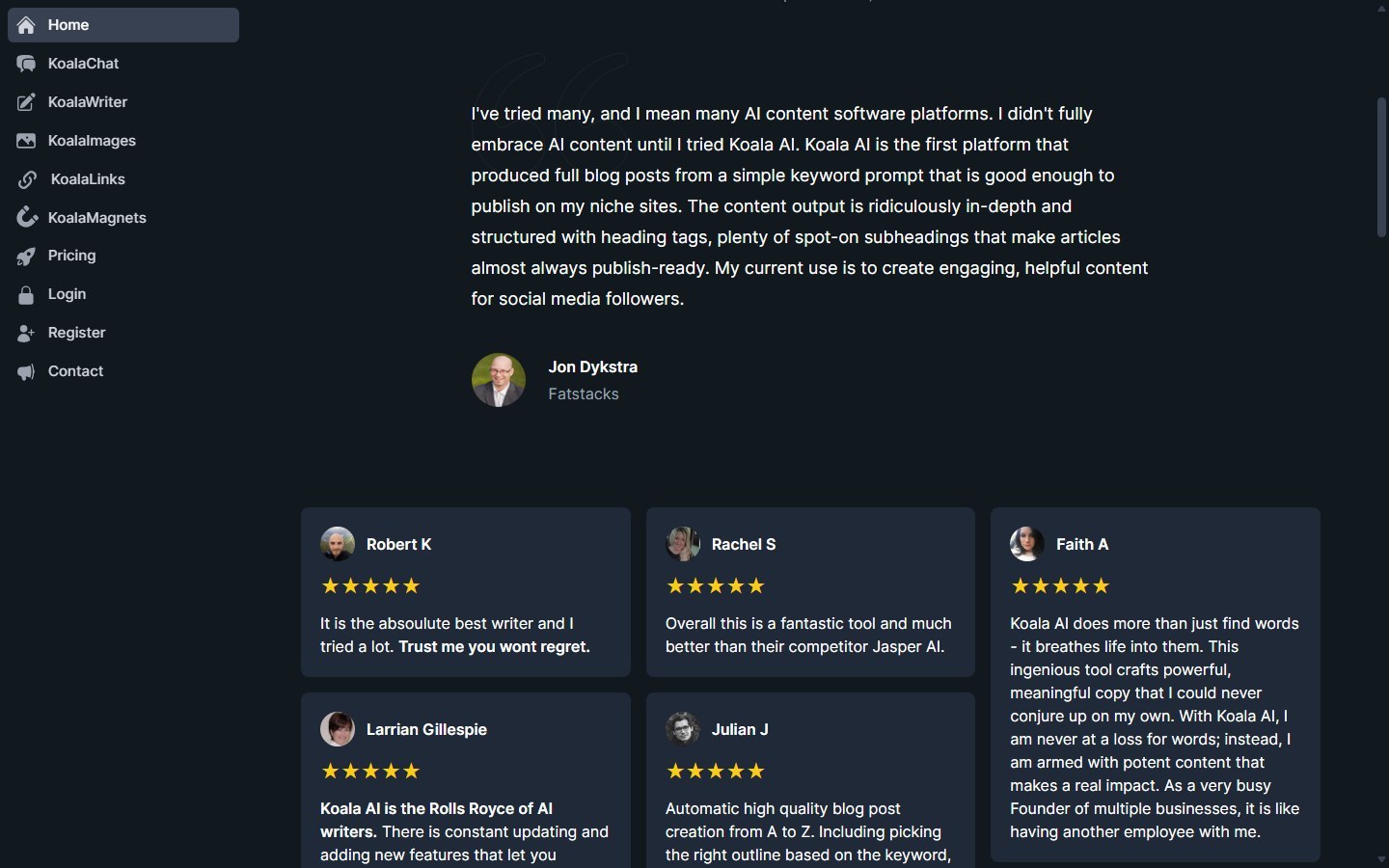
KoalaWriter is a closer fit for affiliate publishers who want an article-level workflow with search-informed generation and fewer campaign-management layers. It emphasizes long-form content, configurable article types, live-source options, and tools designed around publishing blogs rather than broad marketing operations.
Why KoalaWriter is better than WordHero
KoalaWriter narrows the interface around the tasks many niche-site operators actually perform: choose a keyword, configure the article, use search context, add links or media settings, and create a draft. That focused sequence may reduce setup time compared with assembling a document from general writing tools.
It is particularly relevant when product roundups, affiliate posts, and informational content dominate the calendar. The platform's value still depends on whether prices, product specifications, recommendations, and external claims are verified before publication.
Where KoalaWriter falls short
It is not a substitute for a complete brand-governance system, technical SEO platform, or editorial review. Credit or word allowances can make large outputs expensive, and live-source retrieval does not guarantee that the selected evidence is authoritative or current.
Choose KoalaWriter if: a streamlined affiliate-blog workflow is the priority. Avoid it if: cross-channel campaigns and team-level brand controls drive the project.
3. SEO Writing AI: Best for Bulk WordPress Production
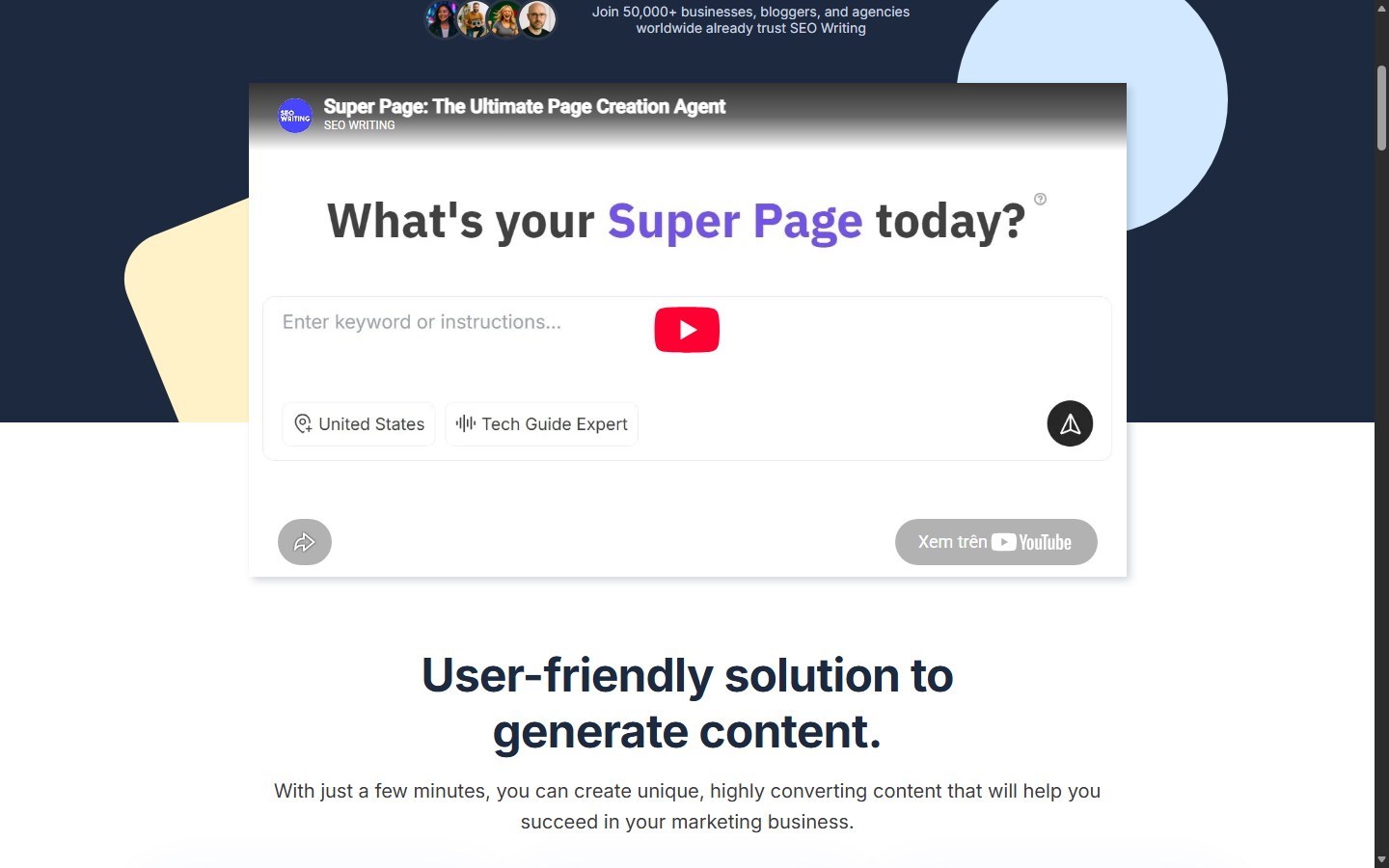
SEO Writing AI is the strongest replacement when WordHero users need bulk article queues, explicit SERP-led options, media controls, and direct WordPress publishing. Its public workflow includes one-click posts, bulk tasks, Content Score, Real-Time SERP options, Connect to Web, AI images, and WordPress integration.
Why SEO Writing AI is better than WordHero
The product exposes a clearer route from spreadsheet or keyword queue to multiple drafts. Bulk Generation supports up to 100 tasks in a batch, while WordPress controls can map content type, status, categories, authors, tags, parent pages, featured images, and supported SEO metadata.
That does not justify automatic publication. A safer workflow generates a small pilot, sends drafts to staging, checks factual and semantic errors, and scales only when the correction rate remains acceptable.
Current public pricing provides three free articles and 25,000 words. Paid Starter is listed at $19 monthly or a $14 monthly equivalent billed $168 annually. A generation can cost more than one credit depending on the model, so “up to 50 articles” is not a guarantee for every Starter workflow.
Where SEO Writing AI falls short
Its many settings create configuration risk. Content Score and SERP features do not prove originality or ranking performance, and automatic links or images still require review. Brand and client governance are less central than in an enterprise marketing platform.
Choose SEO Writing AI if: controlled bulk WordPress drafts are the goal. Avoid it if: the team lacks a keyword map, fact-check process, or publishing approval gate.
4. Writesonic: Best for AI-Search and GEO Workflows
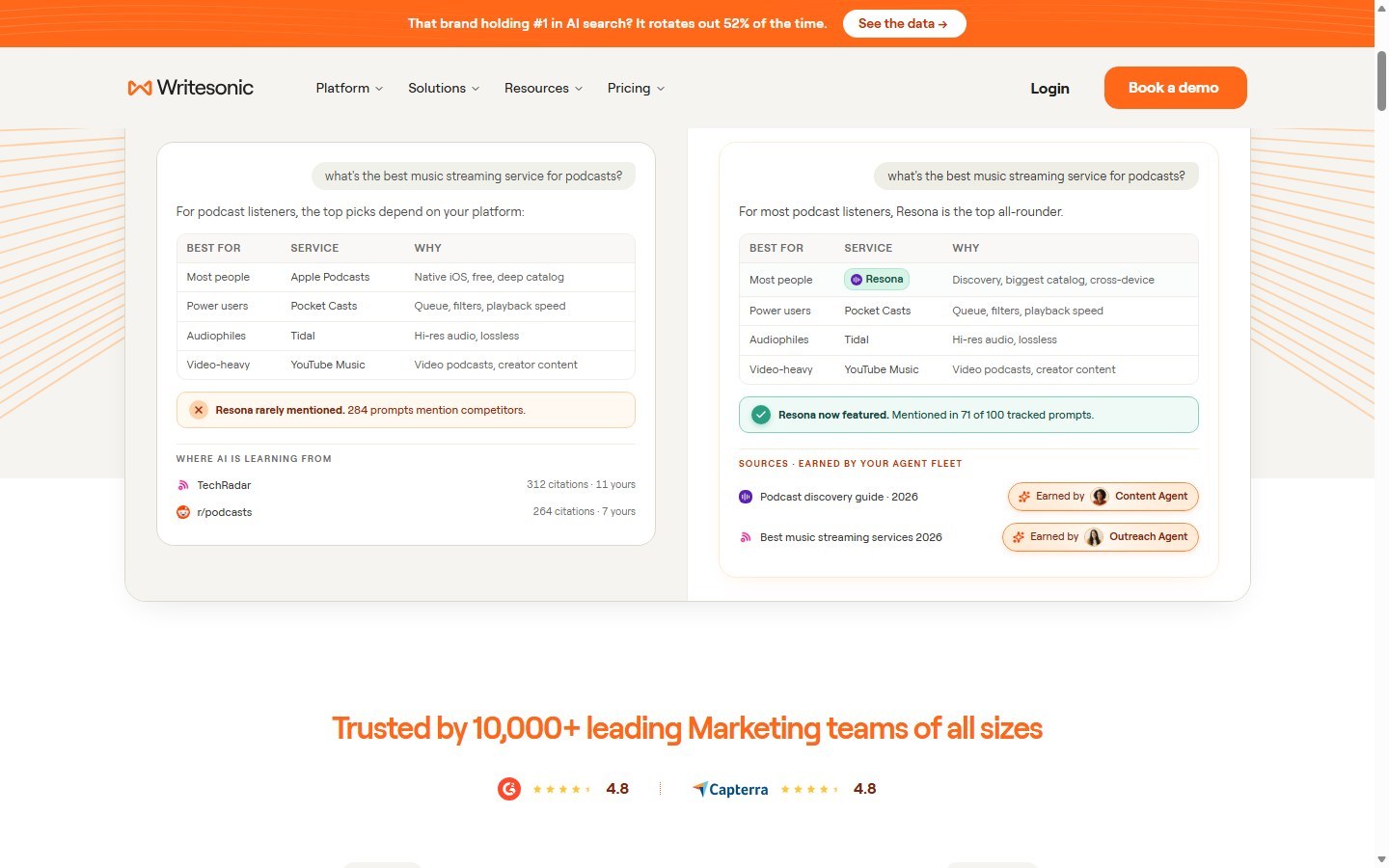
Writesonic is the most relevant WordHero alternative when content creation is tied to visibility in Google and AI answer engines. Its current positioning extends beyond article generation into SEO and generative-engine optimization workflows.
Why Writesonic is better than WordHero
Writesonic connects writing with a broader measurement and optimization narrative. That can help teams whose content brief includes not only traditional search intent but also how a brand is represented across AI-generated answers.
The practical advantage is workflow consolidation. A team can move between research, writing, optimization, and AI-visibility tasks without treating each article as an isolated document. This is useful only when the organization has a defined method for validating citations, entity facts, and recommendations.
Where Writesonic falls short
Writesonic's expanding product range makes plan comparison harder. SEO, article generation, AI visibility, usage credits, seats, and advanced models can sit behind different allowances. Buyers should identify the exact product bundle and checkout total rather than assuming one headline plan includes every advertised capability.
Vendor language about becoming visible or cited in AI systems is positioning, not a placement guarantee. External engines decide what to crawl, trust, retrieve, and cite.
Choose Writesonic if: AI-search monitoring and content production need to share one operating layer. Avoid it if: you want a simple, predictable blog writer with minimal plan complexity.
5. Scalenut: Best for End-to-End SEO Content Planning
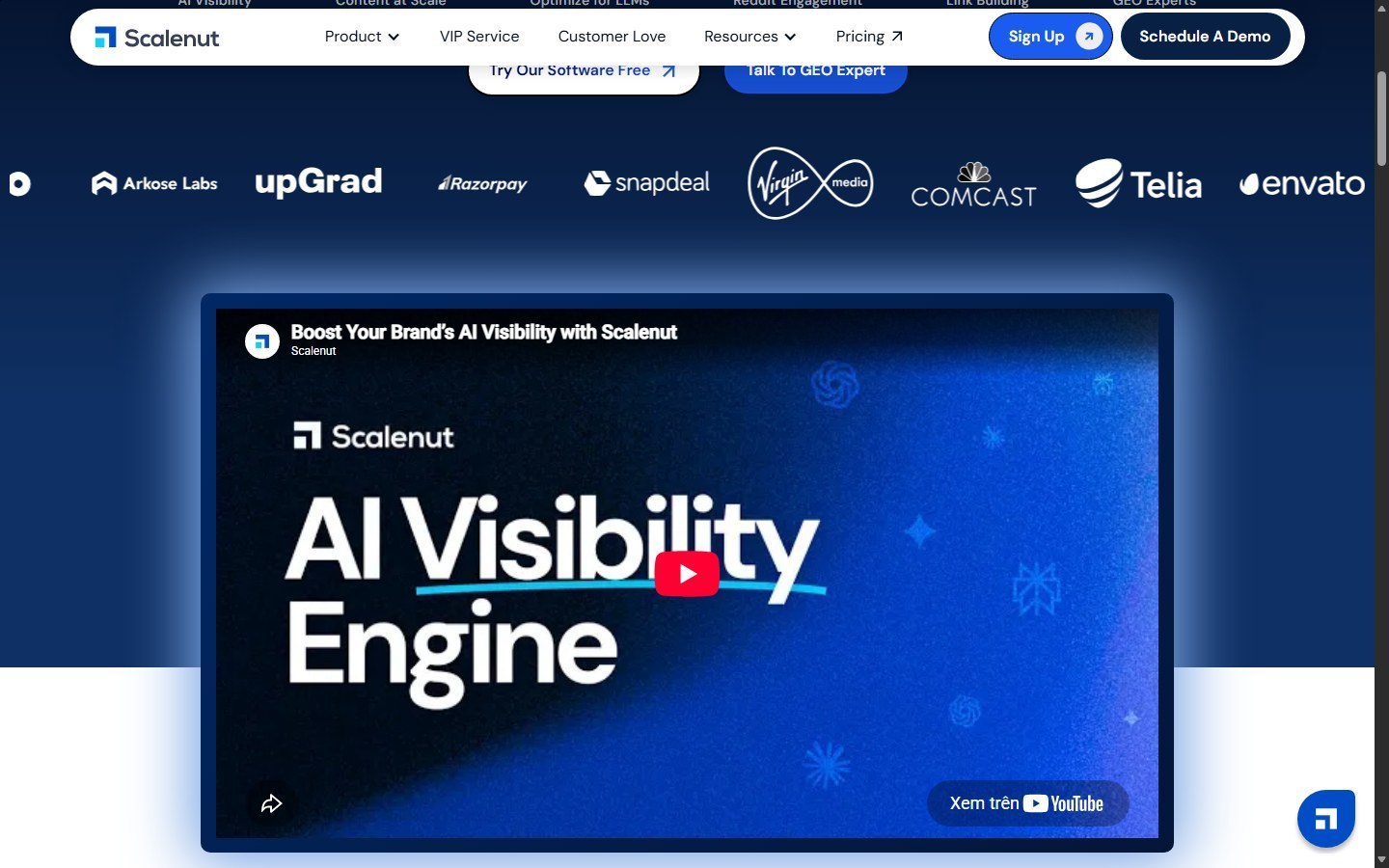
Scalenut is a better WordHero alternative for teams that want keyword planning, briefs, generation, optimization, and content operations in a connected SEO workflow. It is less about producing an isolated draft and more about managing the path from query opportunity to optimized page.
Why Scalenut is better than WordHero
Scalenut is stronger when content teams need to organize clusters and build research-informed briefs before writing. That creates a clearer handoff between strategy, drafting, and optimization than beginning with a blank long-form editor.
The platform can suit agencies that repeatedly move from topic research to briefs and drafts. Its SEO recommendations should still be treated as evidence inputs. Adding every suggested term or matching an arbitrary score can make content repetitive and less useful.
Where Scalenut falls short
The broader workflow costs more and requires more onboarding than a lightweight writer. Teams that already use dedicated keyword research and content optimization tools may pay for overlapping capabilities. Plan names, credits, and AI limits should be checked at live checkout.
Choose Scalenut if: SEO planning and production need one coordinated environment. Avoid it if: your briefs are already mature and you only need inexpensive drafting.
6. Frase: Best for Briefs and Editor-Led Optimization
Frase is the best WordHero replacement for teams that want a human editor to control SERP research, briefs, topic coverage, and revision. Its core value is research-led content workflow rather than maximizing unattended article volume.
Why Frase is better than WordHero
Frase helps editors inspect competitor structures and questions, build briefs, and evaluate draft coverage inside the same workflow. That can improve the reasoning that happens before and after generation. WordHero users who feel the Keyword Assistant is too light may find this research layer more useful.
The platform is a better fit when subject-matter input and editorial judgment are central. It supports a deliberate sequence: research the query, approve the brief, draft, optimize, verify, and publish.
Where Frase falls short
Frase is not primarily a one-click bulk publishing engine. Teams seeking large automated queues may prefer SEO Writing AI or another programmatic platform. Optimization recommendations reflect the analyzed result set and cannot identify every missing fact, expert insight, or original contribution.
Choose Frase if: editors own quality and need better briefs. Avoid it if: unattended bulk throughput is the main buying criterion.
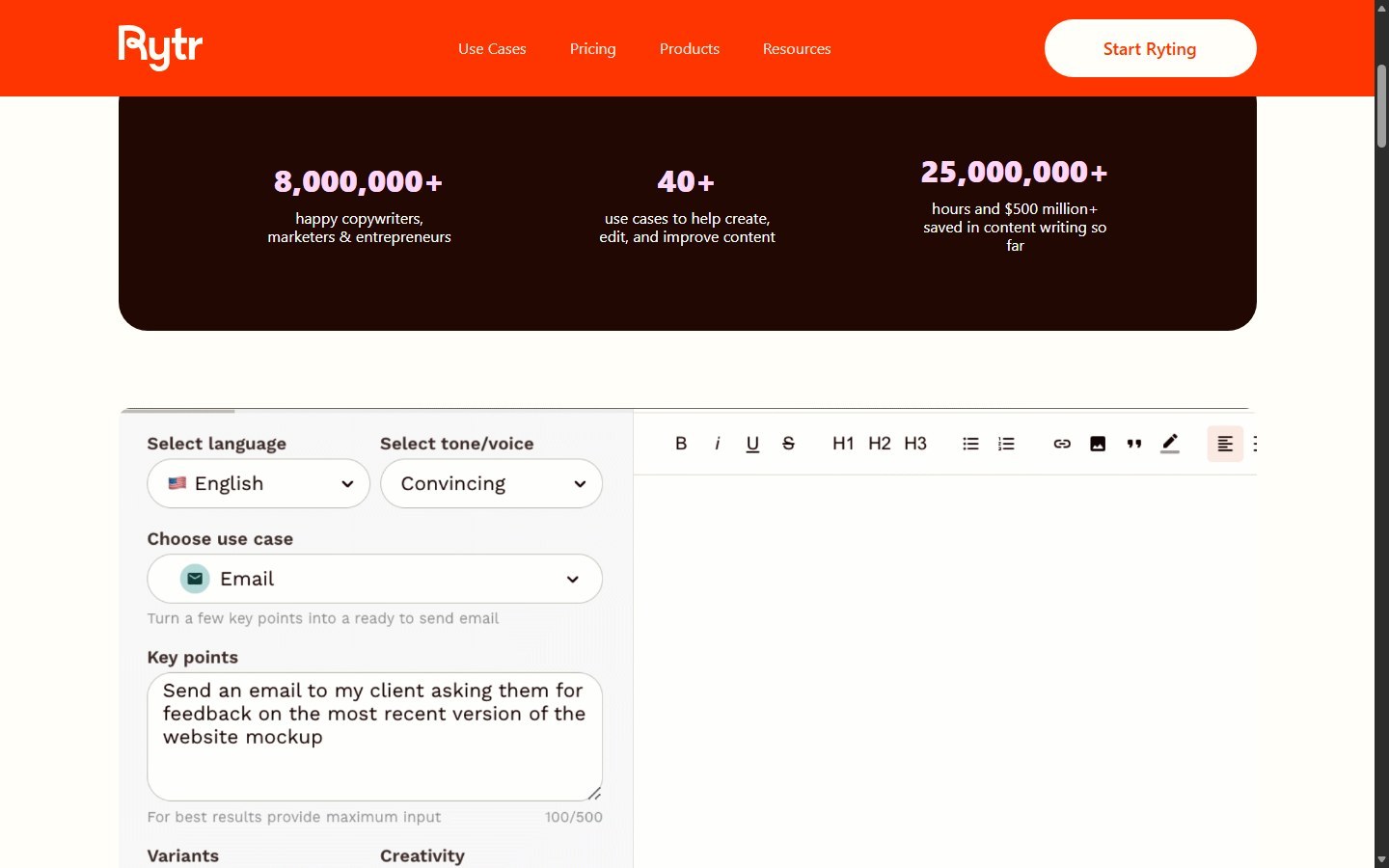
7. Rytr: Best Budget Alternative
Rytr is the strongest low-cost WordHero alternative for short-form marketing copy, outlines, rewrites, and occasional blog assistance. It provides a simpler entry path for creators who do not need extensive SEO projects, image credits, or a sophisticated long-form system.
Why Rytr is better than WordHero
Rytr reduces financial and interface overhead. A small business can draft emails, social copy, product descriptions, outlines, and short sections without paying for WordHero capacity that remains unused.
The supplied cluster includes a detailed WordHero vs Rytr comparison for buyers choosing between WordHero's fuller blog workflow and Rytr's lower-cost writing utility.
Where Rytr falls short
Budget simplicity comes with less long-form SEO depth. Rytr should not be mistaken for a content optimizer, source-verification system, or bulk WordPress production platform. Longer articles need stronger outlines, evidence management, consistency checks, and editing than a short-form tool naturally provides.
Choose Rytr if: budget and short-form speed matter most. Avoid it if: long-form SEO articles and high-volume WordPress publishing are the core workload.
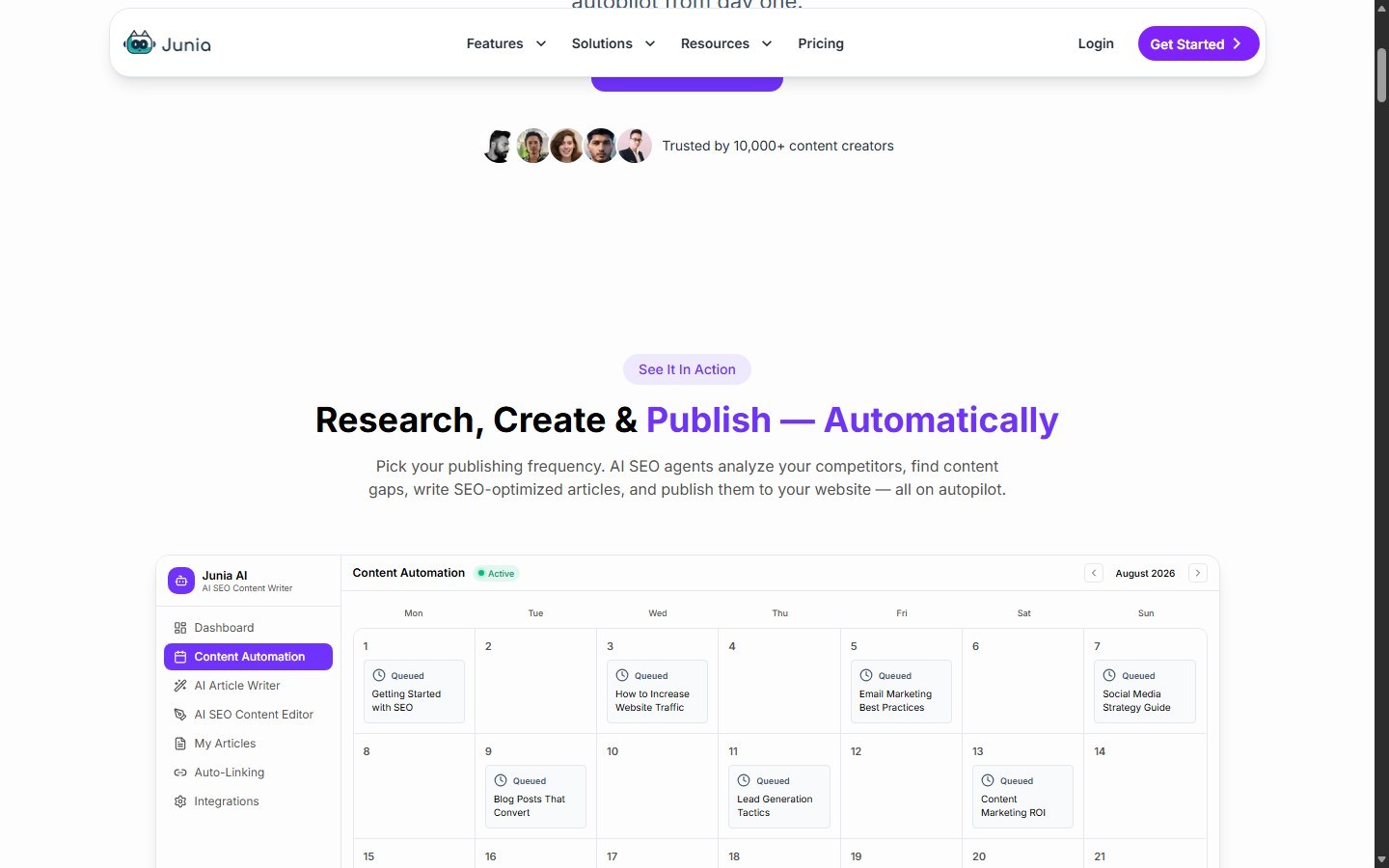
8. Junia AI: Best for Long-Form SEO Automation
Junia AI is a useful middle-ground replacement for users who want long-form SEO generation, reusable brand context, research assistance, and publishing options without adopting a full enterprise marketing suite. Its positioning is closer to an SEO article platform than a general prompt interface.
Why Junia AI is better than WordHero
Junia AI brings long-form workflow, brand context, research, images, links, and SEO-oriented production into one sequence. That can reduce tool switching for a small content team. It is especially relevant when WordHero's editor is convenient but the organization wants more guided article construction.
A pilot should test whether brand voice survives across different article types and whether source controls produce usable evidence. Feature availability, word limits, and publishing integrations may vary by plan.
Where Junia AI falls short
Junia AI has a smaller ecosystem and less public enterprise evidence than established marketing platforms. Teams should test exports, WordPress behavior, workspace separation, billing, and support before migrating a large archive or client operation.
Choose Junia AI if: you want an integrated long-form SEO workflow at a midmarket level. Avoid it if: formal enterprise governance, a large integration ecosystem, or independently documented scale is mandatory.
How Should You Choose a WordHero Alternative?
Choose the tool that removes the most expensive verified bottleneck while preserving editorial control. Do not score products by the number of features listed on their homepages.
Use this decision sequence:
- Identify whether your constraint is research, drafting, brand consistency, optimization, volume, or publishing.
- Select two alternatives designed for that constraint.
- Use one real keyword and an approved brief.
- Supply the same sources, required entities, tone, exclusions, and internal links.
- Measure generation time, research time, editing time, factual corrections, formatting repairs, and accepted output.
- Test WordPress only with draft status on a staging site.
- Compare the full annual cost, including seats, credits, model usage, add-ons, and migration labor.
- Keep the lower-risk process, not necessarily the fastest first draft.
| Primary need | First tool to test | Second benchmark |
|---|---|---|
| Brand governance | Jasper | WordHero Infinity |
| Affiliate blog articles | KoalaWriter | Junia AI |
| Bulk WordPress drafts | SEO Writing AI | Junia AI |
| AI-search visibility | Writesonic | Scalenut |
| SEO planning and clusters | Scalenut | Frase |
| Research-led briefs | Frase | Scalenut |
| Low-cost short-form work | Rytr | WordHero Creator |
| Integrated long-form automation | Junia AI | KoalaWriter |
When Should You Stay with WordHero?
Stay with WordHero when its current editor, Brand Voices, multilingual output, SEO projects, and usage allowance already produce approved content at a competitive total cost. Migration is not automatically an upgrade.
Keeping WordHero can make sense when:
- Your prompts, Brand Voices, and long-form process are already documented.
- Creator or Infinity capacity matches actual monthly demand.
- Editors approve most drafts without extensive rewriting.
- The lifetime entitlement materially lowers long-term cost and its limits fit the workload.
- You do not need deeper SERP briefs, bulk WordPress controls, or enterprise campaign governance.
- Switching would require retraining, prompt migration, and revalidation without a measurable benefit.
Before renewing or buying a lifetime entitlement, review the current WordHero deals and lifetime terms. Capture the checkout price, promotion, included Enhanced Mode tokens, SEO projects, Art credits, seats, refund terms, renewal behavior, and fair-use language. The presence of two approved affiliate routes does not prove that either applies an automatic discount.
If the subscription remains the better fit, check current WordHero subscription pricing. If the one-time offer matches your expected usage, inspect the current WordHero lifetime deal. Verify both destinations and terms at checkout because ScaleWitAI does not infer their final destination from the tracking URL.
How Do You Migrate Away from WordHero Safely?
Export content and configuration before canceling, then run both systems in parallel for a small batch. Do not move an entire content calendar based on one attractive demo.
Migration checklist:
- Export or copy all required documents in editable and rendered formats.
- Record Brand Voice instructions, glossaries, prohibited claims, audience definitions, prompts, and examples.
- Save source lists, internal-link rules, metadata templates, category mappings, and WordPress settings.
- Record image prompts and license evidence for published media.
- Disconnect WordPress, API, browser-extension, or automation credentials that are no longer required.
- Rotate credentials when an integration stored a reusable secret.
- Confirm cancellation, renewal date, remaining access, refund eligibility, and deletion/retention behavior in writing.
- Keep the old account until the new workflow reproduces an approved article and a correct WordPress draft.
- Monitor duplicate URLs, malformed blocks, missing metadata, broken images, and accidental publication during the transition.
Do not assume documents, prompts, brand settings, or media can be exported in bulk unless the official account interface confirms it. Retain independent copies before account access changes.
Which WordHero Alternative Should You Choose?
Jasper is the strongest choice for brand-governed teams, KoalaWriter for affiliate publishers, SEO Writing AI for bulk WordPress production, Writesonic for AI-search workflows, Scalenut for connected SEO operations, Frase for editor-led briefs, Rytr for budget short-form work, and Junia AI for integrated long-form automation.
The best value is the platform that produces the highest number of approved, evidence-backed pages per dollar and editor hour. Run a controlled pilot, keep WordPress in draft mode, and upgrade only after the workflow passes factual, semantic, brand, media, and publishing QA.
FAQ
Is there a free WordHero alternative?
Yes. Rytr and several other platforms offer limited free access, while SEO Writing AI currently lists three free articles and 25,000 words. Free plans have smaller allowances and may exclude advanced models, SERP analysis, bulk queues, brand controls, or publishing features. Confirm current entitlements before testing.
What is the best WordHero alternative for SEO blog posts?
KoalaWriter is a strong option for focused affiliate and informational posts, while Frase and Scalenut are better when research and optimization lead the process. SEO Writing AI is more relevant when bulk generation and WordPress handoff matter. The best choice depends on whether you need a writer, optimizer, or production system.
What is the best WordHero alternative for brand voice?
Jasper is the strongest option in this list for structured brand governance across marketing campaigns. Junia AI and WordHero also provide reusable brand context. Test the same approved samples and prohibited-language list because a feature called Brand Voice does not guarantee consistent output.
Is Rytr better than WordHero?
Rytr is better for low-cost short-form assistance, while WordHero provides a fuller long-form, SEO project, image, and Brand Voice workflow. Rytr is not the stronger choice when bulk long-form articles, advanced SEO guidance, or high-capacity content operations are required.
Which alternative is best for bulk WordPress articles?
SEO Writing AI is the most direct choice in this list for bulk queues and WordPress-oriented publishing controls. Generate a small pilot and send drafts rather than published posts. Validate post type, slug, author, category, links, images, metadata, and duplicate protection before increasing volume.
Does WordHero offer a lifetime deal?
WordHero maintains a separate lifetime-offer route supplied for this content cluster, but availability and entitlements must be verified on the live offer page. A lifetime label does not guarantee unlimited use of every model or future feature. Check fair-use, tokens, credits, seats, refunds, updates, and service-continuity terms.
Can AI writing software replace a human editor?
No. These platforms can accelerate research, outlining, drafting, rewriting, and formatting. A qualified reviewer still needs to verify claims, sources, search intent, originality, brand rules, links, media rights, disclosures, metadata, and WordPress output.
How should an agency test a WordHero replacement?
Use one client-safe pilot with fixed inputs and draft-only publishing. Measure accepted output, correction rate, editor time, credits, support quality, workspace separation, and WordPress accuracy. Do not upload confidential client data until privacy, security, retention, model-provider, and contractual requirements have been reviewed.